

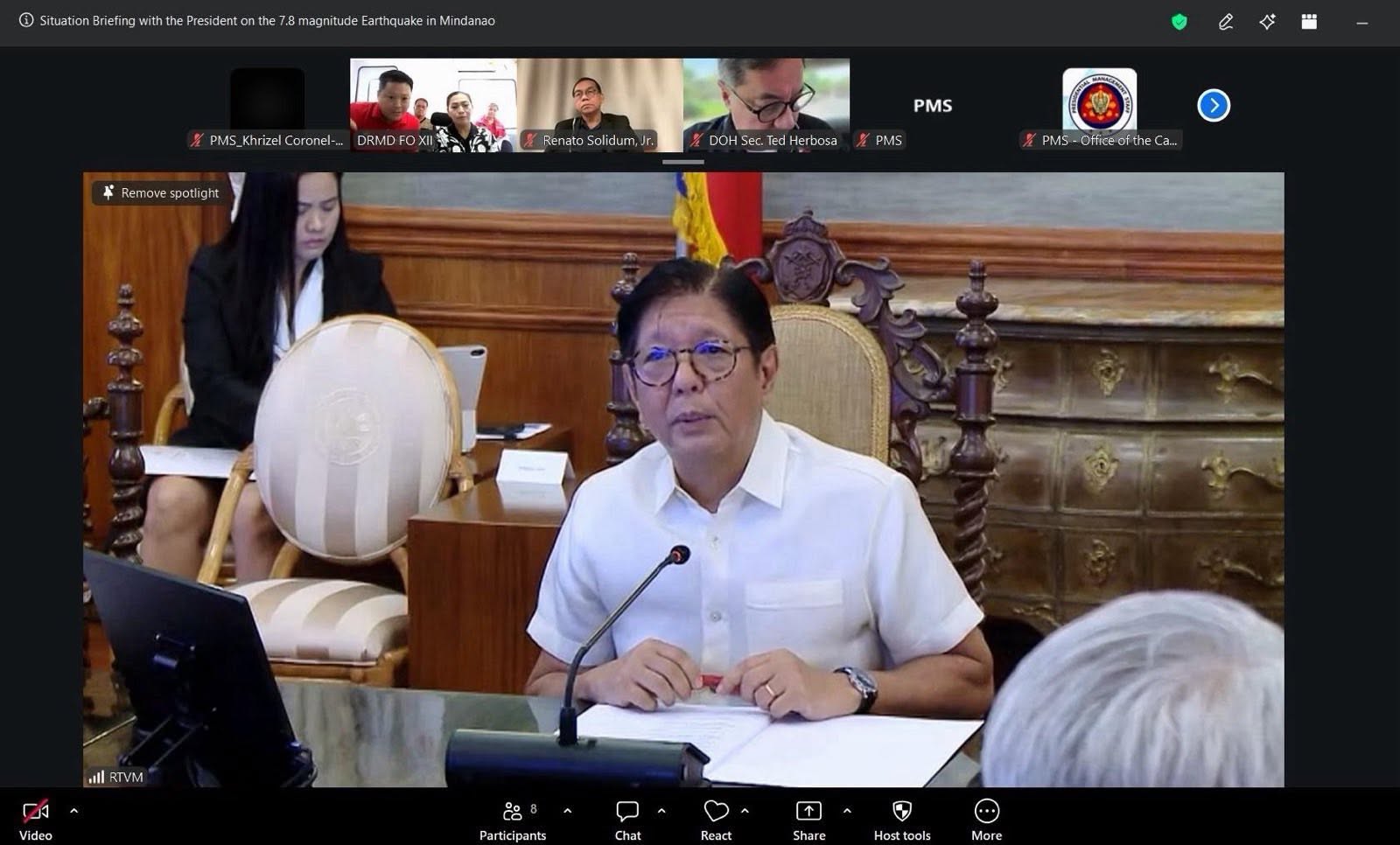
As the tremors shook the region, residents in Mindanao experienced panic and confusion, with many rushing to safety as buildings swayed and trembled. Reports from local authorities indicated that while the earthquake was indeed powerful, there were no immediate reports of casualties or significant damage, which brought a sense of relief to the government and the people alike. However, the President understood the importance of being proactive; hence, he swiftly organized a briefing to assess the situation on the ground.
During the briefing, key officials from various sectors, including disaster response, health, and local government, gathered to discuss the immediate response measures that needed to be deployed. The dialogue among these officials highlighted the collaborative spirit that is essential in times of crisis. The President emphasized the necessity of ensuring that all resources are mobilized effectively, and that communication lines remain open to relay information to the public.
Crucially, the government’s focus is not just on the immediate aftermath but also on the long-term implications of such natural disasters. Earthquakes are a stark reminder of the country’s vulnerability due to its geographical location along the Pacific Ring of Fire, where seismic activity is commonplace. This reality prompts continuous discussions about infrastructure resilience and disaster preparedness strategies that need to be in place to safeguard the populace.
As the briefing concluded, President Marcos reassured the public of the government's commitment to ensuring their safety and well-being. He urged citizens to stay informed and to follow updates from authorities regarding safety procedures. The importance of community awareness cannot be overstated, especially in light of such natural disasters. Moreover, the President’s proactive approach underscores a leadership style that seeks to prioritize the welfare of the people during emergencies.
In times like these, it becomes vital for individuals to stay vigilant. The government has encouraged residents to prepare emergency kits and to have a family emergency plan in place. The potential for aftershocks is always a concern following a major earthquake, and being equipped with knowledge and resources can significantly mitigate risks.
Data sourced from GMA News highlights that the situation is still evolving, and the government will continue to monitor the developments closely. The commitment to transparency and regular updates will be key in maintaining public confidence as the nation navigates the aftermath of this natural disaster. President Marcos’s leadership during this crisis showcases the importance of responsive governance and the need for a united front in the face of adversity. As the days unfold, the focus will remain on recovery, resilience, and learning from the lessons that such events impart.