

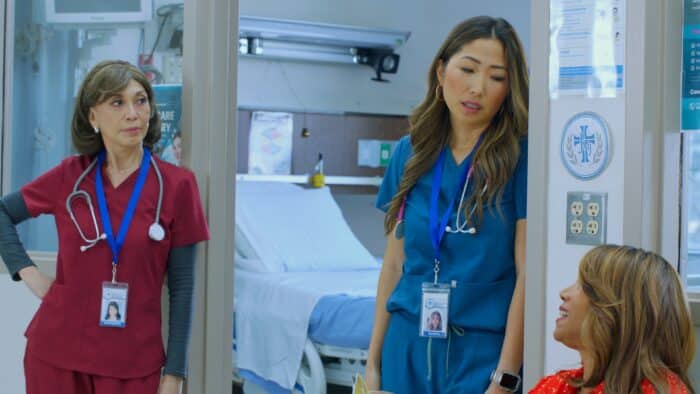
The global entertainment landscape is witnessing a historic shift as "Nurse The Dead" officially cements its place in television history. As the very first television series produced by a Filipino studio to be filmed directly in the heart of Hollywood, this groundbreaking production does far more than just break barriers—it completely redefines how Southeast Asian stories are told on the world stage. Filmed against the vibrant backdrop of Los Angeles, this ambitious project blends cultural authenticity with high-quality international production standards, signaling a new era of global representation and creative sovereignty for Filipino talent.
At its core, "Nurse The Dead" introduces one of the most distinctive and engaging concepts of the television season: a supernatural workplace comedy set inside a bustling, haunted Los Angeles hospital. The narrative follows Noa Reyes, a highly capable Filipina nurse supervisor whose life is made infinitely more complicated by a rare, chaotic gift—she can see and communicate with ghosts. This supernatural element turns her already demanding job upside down, making her responsible not only for her overworked medical staff and demanding living patients but also for a ward full of restless, lingering spirits who refuse to cross over. By mixing comedy, drama, and the supernatural, the series presents a fresh lens on the chaotic daily grind of hospital life.
The choice of a healthcare setting is both culturally significant and deeply resonant. For generations, Filipino nurses have served as the vital backbone of global healthcare systems, particularly across the United States, the United Kingdom, and the Middle East. Despite their massive contributions, unwavering dedication, and ubiquitous presence in global medical facilities, Filipino healthcare workers have historically been relegated to the background of Western media, often portrayed as minor characters or passive background extra figures. "Nurse The Dead" directly confronts and dismantles this trend. By placing a resilient, funny, and deeply human Filipina nurse supervisor at the absolute center of the narrative, the series celebrates their leadership, work ethic, and the unique cultural value of 'malasakit' (deep compassion) that they bring to their high-stakes profession.
What truly elevates this series is how naturally it weaves complex human experiences into its comedic framework. Underneath the laugh-out-loud moments of managing eccentric ghosts and stubborn doctors, the show dives deep into universal themes of grief, family, healing, and reconciliation. The spirits haunting the hospital corridors are not merely sources of horror or jump scares; instead, they represent unresolved emotional business, unspoken apologies, and the deep-seated human need for closure. Through Noa’s daily interactions with these spirits, the audience is treated to a beautiful, often touching exploration of what it truly means to heal—both for the living who are left behind and the dead who are searching for peace.
From an industry perspective, the historical significance of this project cannot be overstated. While individual Filipino actors and creators have slowly made inroads into Western entertainment over the decades, the backend structural ownership of the industry has largely remained out of reach. "Nurse The Dead" represents a paradigm shift because it is a product of a Filipino studio. This means that creative control, financial ownership, and the overarching artistic vision remain firmly in Filipino hands. This structural independence ensures that the cultural nuances, dialogue, and family dynamics portrayed on screen remain fully authentic, free from the sanitizing or exoticizing lens that sometimes occurs when local stories are filtered through foreign studios. It establishes a viable, inspiring blueprint for other Philippine production houses looking to scale their operations globally.
Furthermore, the technical execution of "Nurse The Dead" highlights a seamless integration of Filipino creativity and Hollywood expertise. Filming on-site in Los Angeles allowed the production to leverage top-tier studio facilities, advanced cinematic equipment, and highly skilled technical crews, resulting in a polished, world-class aesthetic that can easily stand alongside mainstream network comedies. The writing balances sharp, witty Western-style workplace humor with the warmth, dramatic depth, and supernatural lore that are hallmarks of Philippine storytelling. The result is a highly entertaining crossover hit that speaks directly to the global Filipino diaspora while remaining thoroughly accessible and engaging for international audiences.
As major streaming platforms continue to seek out original, high-concept global stories, "Nurse The Dead" arrives at a perfect cultural moment. It proves that Filipino narratives possess the depth, comedic timing, and universal emotional truth required to captivate mainstream global viewers. This historic milestone is a proud moment for the Philippine creative industry, demonstrating that when given the resources and the platform, Filipino storytellers can comfortably compete at the highest levels of global entertainment.
According to a report by Inquirer, this production marks a monumental step forward for Filipino representation in international media.