

Data sourced from international news agencies regarding the recent developments in Spain.
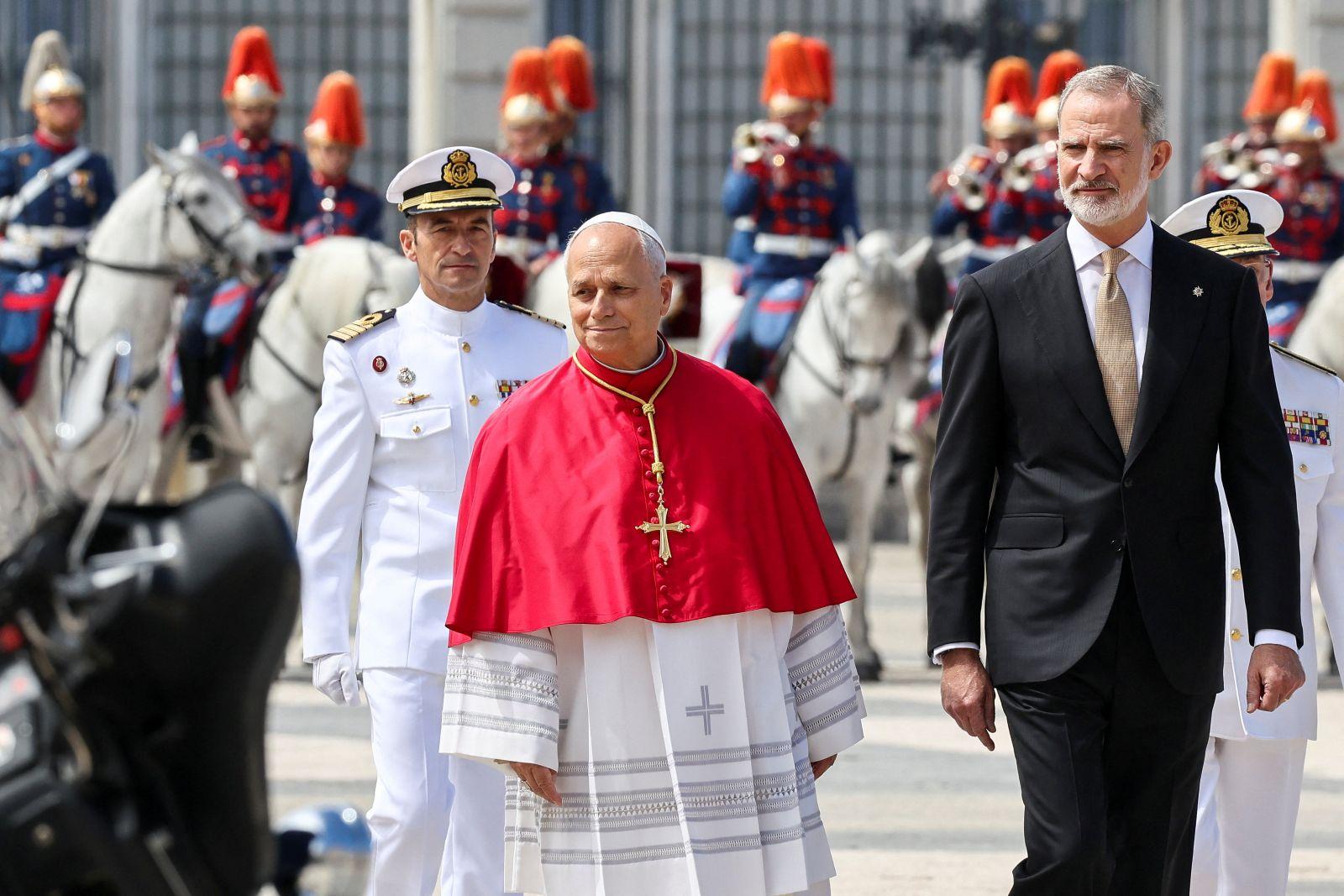
There is a weight that hangs in the air when the leader of the world’s largest religious institution steps onto foreign soil, particularly when that soil has been the site of profound institutional failure. As Pope Leo XIV touched down in Spain this Saturday, the atmosphere was markedly different from the usual festive throngs of flag-waving pilgrims. The core of his message, delivered with a somber and direct tone, was that sexual abuse within the Catholic Church remains 'an open wound.' It is a characterization that speaks not just to the victims who have carried the burden of trauma for decades, but to the credibility of the institution itself.
To understand the gravity of this visit, one must look beyond the pageantry of the papal arrival. For years, the global Catholic Church has been embroiled in a soul-searching reckoning. From Ireland to Australia, and notably throughout Europe, the systematic cover-ups and the failure to protect the vulnerable have shattered the trust of millions. Spain, a country with deep historical Catholic roots, has not been immune to these crises. By explicitly acknowledging the wound, the Pope is signaling a departure from the defensive posturing that often characterized the Vatican’s response in years past. He is framing the abuse not as a historical footnote, but as a present-tense reality that demands continued attention and, more importantly, concrete action.
During his time in Spain, the Pontiff is scheduled to meet directly with survivors. These meetings are never merely ceremonial. They represent a collision between the absolute authority of the Church hierarchy and the raw, lived experience of those who suffered at the hands of its representatives. For the victims, these encounters are a litmus test: does the Church genuinely intend to change its structures, or are these gestures meant to offer temporary solace while maintaining the status quo? The Pope’s language suggests a shift toward the latter—an acknowledgment that true healing cannot happen without transparency.
Consider the broader implications for the global community. The Church, as an institution, operates on a level of moral influence that few other organizations possess. When that influence is tainted by the actions of those who abused their position of power, the ripple effects are felt in every parish and every local community. For the Filipino diaspora, many of whom are deeply anchored in their faith, these headlines are often difficult to process. They represent a conflict between their devotion to the Church as a source of comfort and their moral obligation to stand against injustice. It is a tension that many grapple with, balancing faith with a demand for accountability.
Critics have often pointed out that words, while important, are easily forgotten. The real work happens in the dioceses—in the way complaints are handled, in the vetting of clergy, and in the refusal to shield offenders from secular justice. By calling the abuse an 'open wound,' the Pope is effectively reminding his bishops that they cannot simply apply a bandage and move on. An open wound requires constant care, cleaning, and the risk of pain during the healing process. If the Church is to regain the trust of the world, it must stop treating these scandals as public relations problems to be managed and start viewing them as moral failures to be corrected.
As the trip unfolds, the global media will be watching for more than just the Pope's words; they will be watching for his silence where action is needed. Will the promised meetings lead to policy changes? Will the legal authorities in Spain receive the cooperation they need to investigate historical cases? The visit to Spain is more than just a pastoral journey; it is an exercise in damage control that requires radical honesty. For the victims waiting in the shadows of the cathedrals, the hope is that this visit serves as a catalyst for a more open, accountable, and humble Church. It is a delicate balance, but one that is absolutely necessary for the institution to navigate if it hopes to remain a moral force in the twenty-first century. As the world watches, the Church is forced to confront its history, one that is painful but undeniably necessary to address to pave a way for future generations.