

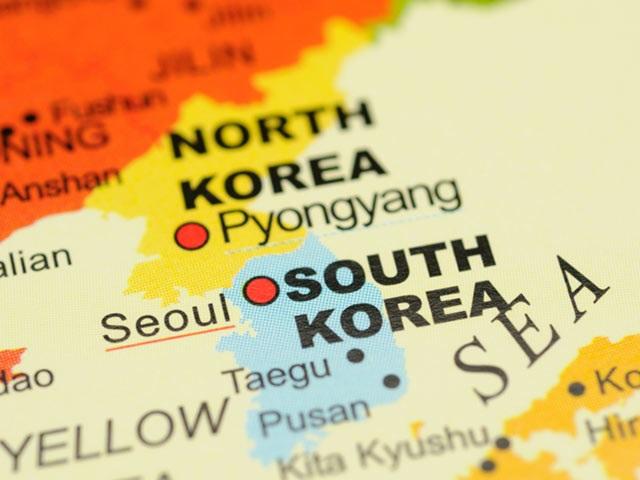
The Korean Peninsula remains one of the world’s most volatile geopolitical flashpoints, and the latest developments have once again put neighboring nations and international security observers on high alert. On Tuesday, North Korea launched several missiles, including at least one short-range ballistic missile, toward the waters off its western coast. This latest show of force, confirmed by South Korea’s military command, underscores the persistent instability in East Asia and Pyongyang's unwavering commitment to expanding and refining its military arsenal despite mounting international pressure.
According to official reports from the South Korean Joint Chiefs of Staff, the launches originated from a western region of North Korea, with the projectiles traveling across the skies before plunging into the sea. South Korea’s defense forces immediately entered a state of heightened readiness, working in lockstep with their American counterparts to analyze the flight data, altitude, and overall trajectory of the missiles. This rapid response highlights the deep-seated security alignment between Seoul and Washington, a partnership that has grown increasingly robust as Pyongyang continues its aggressive military signaling.
To truly understand the gravity of these recent launches, one must look at the broader geopolitical chessboard. These missile tests do not occur in a vacuum; instead, they are carefully calculated moves on a complex diplomatic stage. Historically, North Korea has timed its missile demonstrations to coincide with major military exercises conducted by South Korea and the United States. Pyongyang views these joint allied drills as direct rehearsals for an invasion, utilizing them as a convenient justification to accelerate its own weapons development program. By conducting these launches, North Korean leader Kim Jong Un continues to signal to both domestic and international audiences that his regime will not be deterred by external military pressure or the threat of economic sanctions.
Over the past few years, North Korea's military strategy has transitioned from sporadic, attention-grabbing tests to a highly coordinated, systematic program aimed at achieving operational readiness. The regime has focused heavily on developing short-range ballistic missiles (SRBMs) that utilize solid-fuel technology. Unlike liquid-fueled missiles, which require time-consuming fueling processes prior to launch, solid-fueled missiles can be deployed and fired rapidly, making them far more difficult for allied forces to detect and neutralize pre-emptively. Furthermore, many of these newer missiles are designed to perform low-altitude maneuvers during flight, specifically engineered to bypass existing regional missile defense networks like the Patriot systems and the Terminal High Altitude Area Defense (THAAD) system.
This technological advancement presents a direct and immediate challenge not only to South Korea but also to Japan and United States military bases situated across the Pacific. The frequent testing serves a dual purpose: it allows North Korean engineers to collect vital real-world flight data to perfect their technology, while simultaneously applying pressure on regional adversaries to return to the negotiating table on Pyongyang’s terms.
The response from the international community to Tuesday’s launch was swift. South Korea’s government issued a stern condemnation, emphasizing that these actions are a flagrant violation of United Nations Security Council resolutions, which explicitly ban North Korea from conducting any tests using ballistic missile technology. Officials in Tokyo echoed these sentiments, noting that the ongoing provocations threaten the peace, security, and stability of the entire Indo-Pacific region. Meanwhile, Washington reaffirmed its "ironclad" commitment to the defense of its Asian allies, emphasizing that its extended nuclear deterrence capabilities remain fully operational and ready to respond to any threat.
Despite decades of stringent international sanctions designed to cripple North Korea’s economy and starve its weapons program of vital capital, the regime has consistently managed to sustain its military momentum. Observers suggest that Pyongyang has successfully adapted to chronic economic isolation, leveraging illicit maritime activities, cyber warfare, and diplomatic cover from key allies like Russia and China to keep its military-industrial complex running. The current deadlock within the United Nations Security Council, where permanent members China and Russia have repeatedly vetoed fresh sanctions against North Korea, has effectively given Pyongyang a free hand to continue its testing cycle without fearing immediate diplomatic consequences.
As the geopolitical landscape continues to evolve, the actions of North Korea will undoubtedly remain a primary focus of global security discussions. The persistent cycle of missile tests, followed by allied military maneuvers, highlights the deep mistrust that defines relations on the peninsula. Without a viable path toward diplomatic engagement, the risk of miscalculation, radar misinterpretation, or accidental escalation remains dangerously high. For South Korea and its allies, the challenge lies in maintaining a credible, powerful defense posture while keeping the door open for diplomatic solutions that could eventually bring lasting peace to the region.
Data sourced from official statements by the South Korean Joint Chiefs of Staff and regional news updates.