

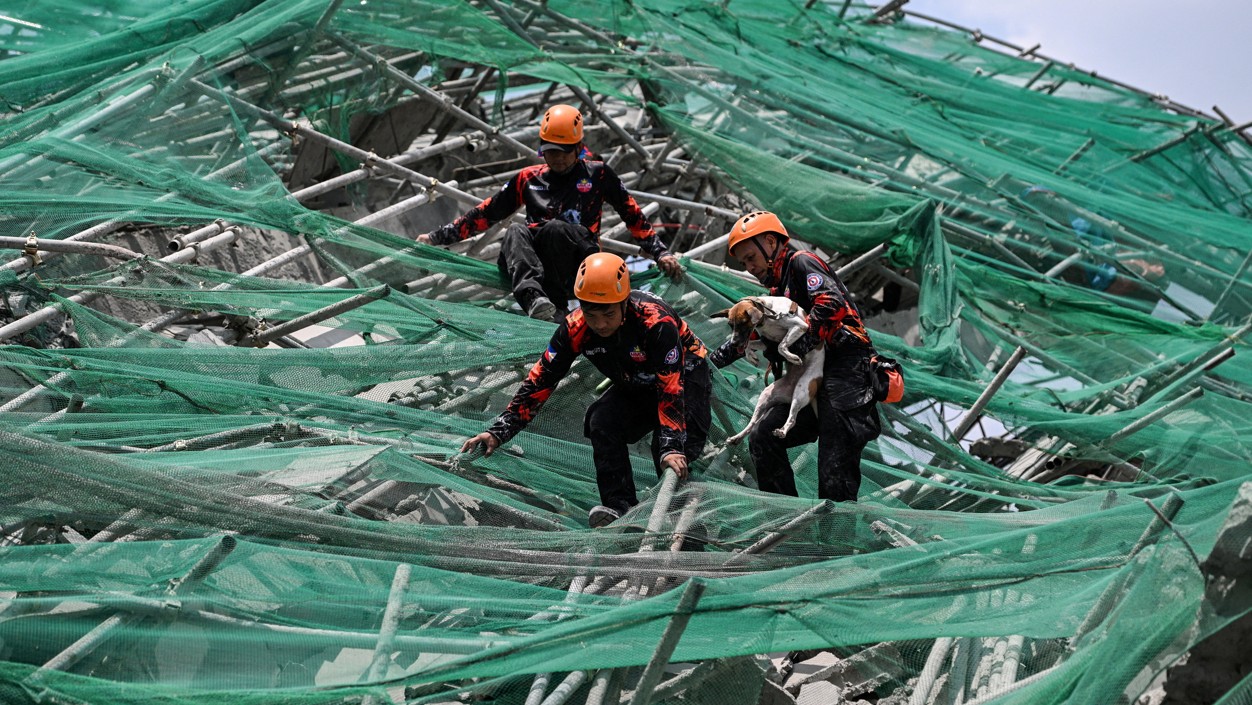
The sudden structural failure of a building is one of the most terrifying emergencies any urban center can face. In Angeles City, Pampanga, the local community was recently shaken by such an incident, thrusting local emergency responders into a race against time. In these critical hours, where every second dictates the boundary between tragedy and survival, the strength of a nation’s disaster response network is put to the ultimate test. It is during these moments of crisis that the military steps beyond its traditional defense role to serve as a beacon of hope and physical reinforcement for local communities.
Recognizing the gravity of the situation, the Armed Forces of the Philippines (AFP) immediately signaled its complete readiness to assist in the search, rescue, and recovery operations in Angeles City. When a building collapses, local emergency services, though highly dedicated, can find themselves overwhelmed by the sheer scale of the debris and the technical complexity of extraction operations. The military's announcement is not merely a statement of solidarity; it is a mobilization trigger for specialized units trained to navigate the deadly maze of twisted steel and pulverized concrete.
Historically, the AFP has maintained a robust Humanitarian Assistance and Disaster Response (HADR) capability. Units such as the 525th Engineer Combat Battalion have undergone rigorous training in Collapsed Structure Search and Rescue (CSSR). These personnel are equipped with specialized tools—such as acoustic life detectors, search cameras, and concrete cutters—designed specifically to find signs of life beneath collapsed structures. By making these assets available, the AFP ensures that the local government of Angeles City has access to the highest tier of disaster response capability available in the country.
This incident also brings to light the broader issues of urban development and infrastructural integrity in rapidly growing provincial hubs. Angeles City, known for its vibrant economy and bustling commercial districts, has seen rapid construction over the last decade. While this growth is a sign of economic vitality, it also places a heavy burden on regulators to ensure that building codes are strictly enforced. The region of Central Luzon is no stranger to structural disasters. Many will recall the devastating 2019 earthquake that caused the collapse of a supermarket in neighboring Porac, Pampanga. That tragedy served as a grim reminder of how vulnerability in building design can lead to catastrophic failure. Weaving these lessons from the past into current emergency protocols is essential as the military and civilian agencies work hand-in-hand to prevent further loss of life.
The logistics of a rescue operation at a collapsed building site are incredibly delicate. Responders cannot simply bring in heavy excavators to clear the rubble immediately, as any sudden shift in the debris could crush survivors trapped in void spaces. Instead, the process must be slow, methodical, and highly coordinated. K9 search units are often deployed first to sniff out survivors, followed by technical search teams using sensitive audio equipment to listen for faint taps or cries for help. Once a survivor is located, structural engineers must assess how to stabilize the surrounding rubble before rescue teams can physically reach the victim. This is where the military’s engineering assets and disciplined coordination become invaluable, providing the structural stabilization expertise necessary to keep both victims and rescuers safe.
Furthermore, the activation of the military’s assets in Angeles City is managed through a well-established chain of command, typically coordinated by the Northern Luzon Command (NOLCOM) and the Office of Civil Defense (OCD). This collaborative framework ensures that there is no duplication of effort on the ground. Instead of complicating the rescue site, military forces integrate seamlessly under the Incident Command System managed by the local government unit. This unified front is crucial for managing the chaotic environment of a disaster zone, allowing for efficient resource allocation, crowd control, and clear communication channels with the media and the public.
Beyond the physical and logistical aspects, the presence of the AFP at a disaster site carries a profound psychological weight. For the families waiting anxiously outside the security cordons, hoping for news of their loved ones, the sight of disciplined, equipped, and organized soldiers arriving on the scene brings a tangible sense of comfort. It signals that the entire weight of the national government is being brought to bear on their local crisis.
As the operations in Angeles City continue to unfold, this incident serves as a stark reminder of the unpredictable nature of structural emergencies and the vital importance of disaster preparedness. The readiness of the AFP to support civilian authorities is a testament to the versatility of our armed forces, proving that their duty to protect the Filipino people extends far beyond the battlefield.
According to a report by GMA News, the military remains on high alert, waiting for the final coordination protocols from the local government to fully deploy its specialized search and rescue teams to the site. The nation watches closely, hoping for a swift and safe resolution to this challenging rescue operation.