

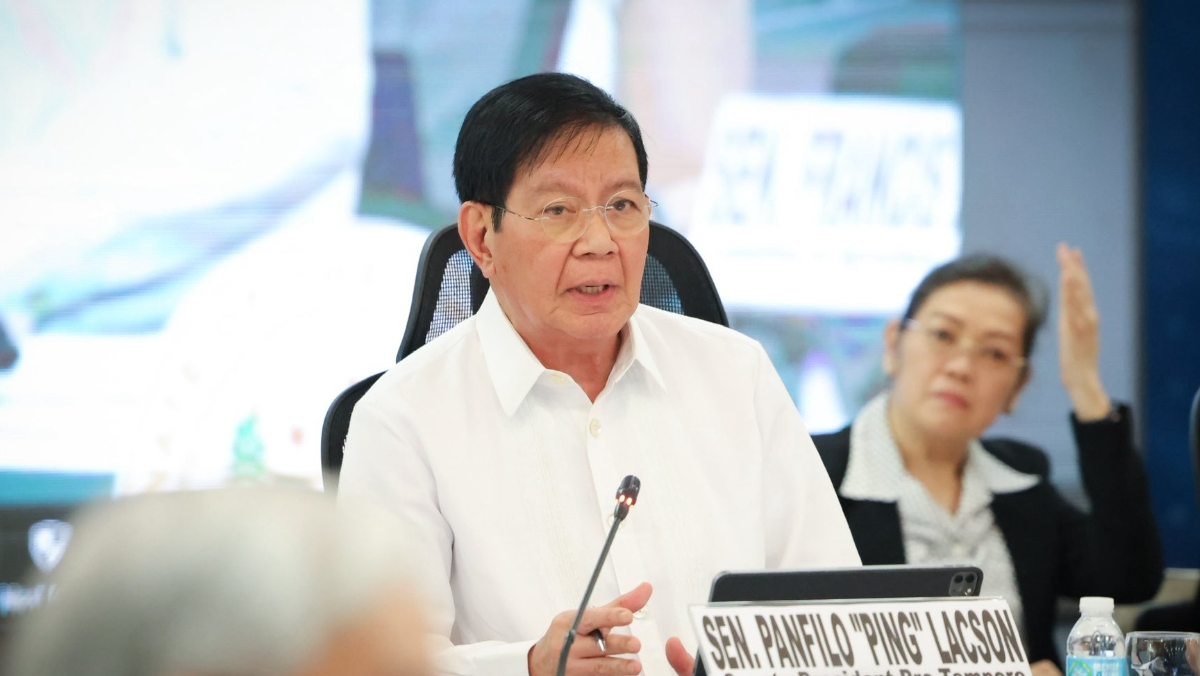
In the grand halls of the Philippine Senate, silence is usually a golden rule once the legislative year comes to a close. When the gavel falls to signal an adjournment sine die, it typically marks the end of heated debates, long committee hearings, and the endless flurry of legislative drafting. For most lawmakers, it is a time to return to their constituencies, assess their accomplishments, and prepare for the challenges of the upcoming session. However, on a quiet Thursday in early June, the serene atmosphere of the empty Senate session hall was abruptly broken. The unexpected appearance of Senator Alan Peter Cayetano and several members of the majority bloc raised eyebrows, not just among the legislative staff, but also in the virtual corridors of social media where veteran Senator Panfilo "Ping" Lacson was watching closely.
Taking to his official account on X, formerly known as Twitter, Senator Lacson could not hide his amusement—and his frustration. He pointed out the sheer irony of the situation: when the Senate was officially in session, attendance could sometimes be a struggle, but the moment the session was adjourned and there was officially no work, some members suddenly found the energy to occupy the session hall. This dry, witty, yet pointed critique from Lacson highlights a deeper undercurrent in Philippine politics—one that involves the strict adherence to parliamentary procedures, the political symbolism of legislative presence, and the constant friction between different factions within the government.
To understand why this incident caused such a stir, one must look at the mechanics of the legislative branch. The term "sine die" is Latin for "without day," and in parliamentary procedure, it means that the Senate or the House of Representatives has adjourned its regular annual session without setting a specific day to reconvene. This is a constitutional boundary. Once a legislative body adjourns sine die, its official power to conduct formal business, vote on bills, and hold official plenary debates is suspended until the next regular session begins, or unless the President calls for a special emergency session. For lawmakers to suddenly gather in the session hall after such an adjournment is not just unusual; it borders on a violation of the established rules that govern the country's highest lawmaking body.
Throughout his long career in public service, Ping Lacson has established himself as a meticulous guardian of government funds and legislative decorum. As a former chief of the Philippine National Police and a multi-term senator, Lacson is well-known for his zero-tolerance policy toward wasteful spending, corruption, and procedural shortcuts. He is perhaps most famous for his consistent refusal to accept his multi-million peso "pork barrel" allocations, a stance that earned him both respect from the public and quiet resentment from some of his peers. For Lacson, the rules of the Senate are not mere suggestions; they are the framework that ensures transparency and accountability to the Filipino taxpayers who fund these institutions. Seeing colleagues treat the session hall as a casual meeting room after official adjournment was bound to elicit a sharp response from the veteran lawmaker.
On the other side of this equation is Senator Alan Peter Cayetano, a seasoned and highly strategic political figure who has occupied some of the most powerful offices in the country, including the Speakership of the House of Representatives and the leadership of the Department of Foreign Affairs. Cayetano's brand of politics is often characterized by bold public maneuvers, high-stakes communication, and a strong focus on public relations. While his supporters view his off-hours presence in the Senate as a sign of dedication and tireless work ethic, critics often interpret such actions as political posturing—an attempt to project influence and maintain a visible presence even when the official legislative machinery has ground to a halt.
This clash of philosophies is indicative of a broader challenge facing Philippine governance. On one hand, you have the institutionalist perspective represented by Lacson, which argues that a nation's strength lies in its strict adherence to laws, rules, and procedures. From this point of view, bypassing parliamentary protocol, even for seemingly harmless meetings, chips away at the integrity of democratic institutions. On the other hand, you have a more pragmatic, action-oriented approach that prioritizes immediate political goals and public messaging over rigid bureaucratic schedules.
As news of Lacson's social media post spread, it triggered a wide array of reactions from the public. Many netizens agreed with Lacson, pointing out that ordinary workers are not allowed to loiter in their offices or hold unofficial meetings after hours, and the same standard should apply to the country's leaders. Others found the humor in the situation, joking about the sudden "overtime" dedication of politicians. However, behind the humor lies a serious conversation about what the public expects from its elected officials. In a country grappling with significant economic hurdles, inflation, and social challenges, the image of lawmakers convening in an officially closed session hall can be perceived as an unnecessary distraction from the real, structured work of governance.
Ultimately, the brief controversy serves as an important reminder of the power of public scrutiny. In the digital age, nothing that happens within the walls of government remains hidden for long. Whether it is a formal debate on the Senate floor or an unscheduled gathering in an adjourned hall, the actions of our leaders are constantly being analyzed, critiqued, and held to account by both their peers and the public they serve. For Ping Lacson, calling out these anomalies is not just about pointing fingers; it is about preserving the dignity of the Senate.
According to a report by Bandera, the immediate reactions and the unfolding narrative of this political call-out shed light on the ongoing discussions surrounding legislative ethics and procedural compliance in the Philippines. As the Senate prepares for its next official session, the lessons from this off-hours episode will undoubtedly linger, reminding all senators that the eyes of the public—and their more observant colleagues—are always watching.