

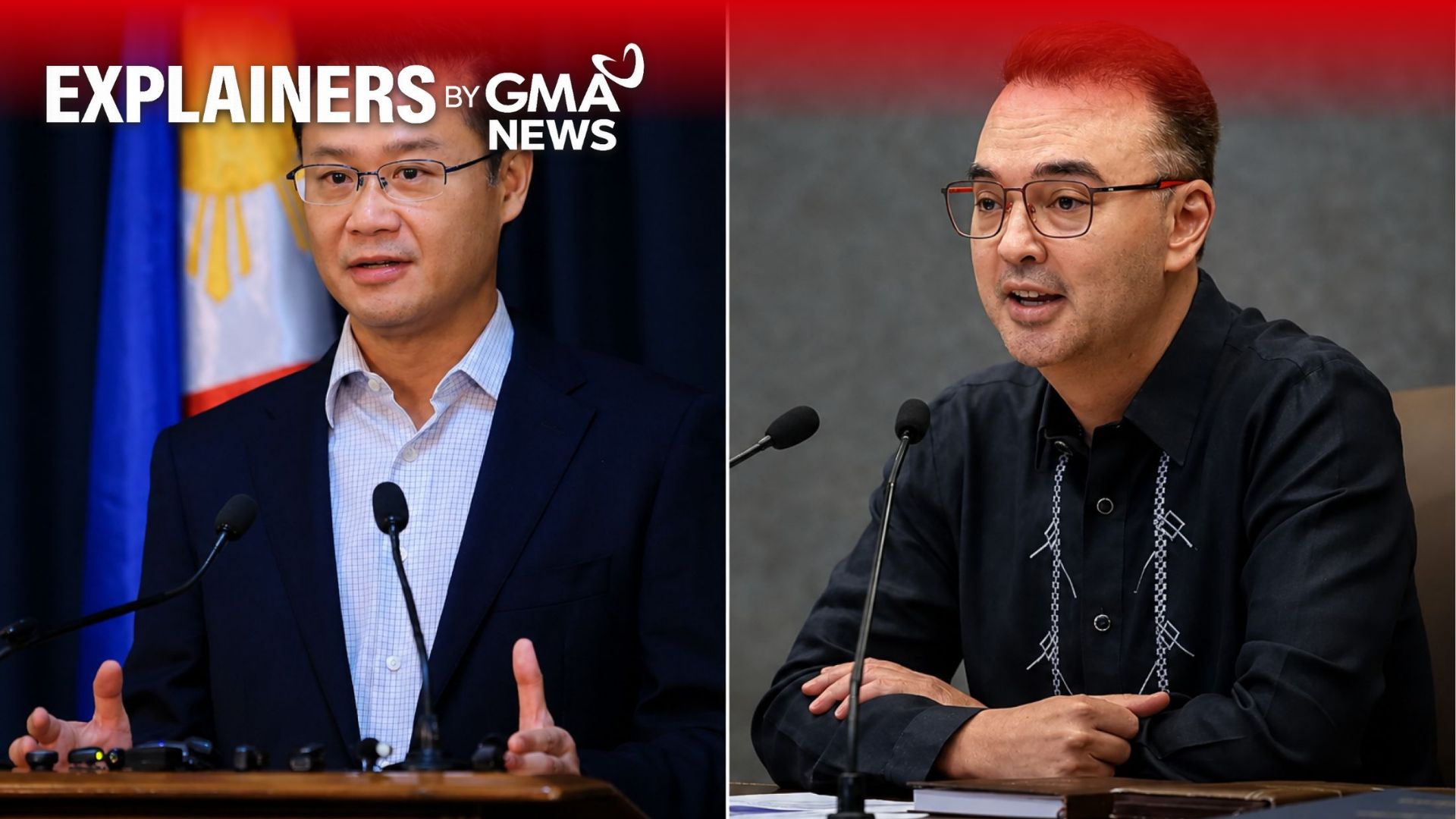
The Philippine Senate has always been a theater of high-stakes political drama, but the latest friction between two veteran lawmakers has taken the nation by surprise. A quiet but intense power struggle has erupted within the upper chamber, with Senator Alan Peter Cayetano and Senator Sherwin Gatchalian both staking their claims to leadership positions. This unexpected friction has not only captivated political observers but has also raised critical questions about the stability of the legislative body and the shifting alliances ahead of upcoming political cycles.
To understand how we arrived at this standoff, one must look at the delicate ecosystem of the Senate. Unlike the House of Representatives, which often operates on strict party lines and massive coalitions, the Senate is a chamber of twenty-four independent republics. Each senator carries a national mandate, making the distribution of power—particularly committee chairmanships and leadership posts—a highly sensitive balancing act. When this equilibrium is disrupted, even slightly, it can trigger a domino effect that impacts the passage of crucial bills, national budget deliberations, and congressional investigations.
The current dispute centers on legitimacy and the mandate to lead. On one side, we have Senator Alan Peter Cayetano, a seasoned politician with a diverse resume that includes serving as House Speaker, Secretary of Foreign Affairs, and a long-time senator. Cayetano is known for his sharp rhetorical skills and deep understanding of parliamentary procedures. On the other side is Senator Sherwin Gatchalian, a highly respected lawmaker recognized for his focus on economic policies, education reform, and energy security. Both senators represent distinct blocks within the chamber, and their competing claims to authority have forced their colleagues to navigate a delicate political minefield.
Data sourced from GMA News reveals that the roots of this leadership row lie in differing interpretations of internal agreements and committee assignments. In the Senate, positions are often decided through consensus, gentle agreements, or what is colloquially known as a "gentlemen's agreement." However, when these informal understandings are interpreted differently by the parties involved, conflict is almost inevitable. For ordinary Filipinos, this is not just a battle of egos; it is a question of how the Senate will function. A divided Senate can lead to legislative gridlock, delaying vital measures that address inflation, job creation, and national security.
Historically, leadership struggles in the Senate are resolved behind closed doors, away from the public eye. The "Senate family" prides itself on maintaining a facade of collegiality, resolving disputes through quiet consensus. However, the fact that this rivalry has spilled into the open suggests that the stakes are incredibly high for both camps. Analysts point out that with the midterm elections on the horizon, control over key committees and the ability to steer the chamber's legislative agenda can provide significant political leverage. It determines who gets the spotlight on national issues and who holds the power to launch high-profile committee inquiries.
Furthermore, this power struggle does not happen in a vacuum. It reflects broader shifts in the national political landscape. As different factions align and realign in preparation for future electoral contests, the Senate often becomes the first battleground. The dynamics between the executive branch and the legislature also play a critical role. A cohesive Senate leadership is vital for the administration to pass its priority legislative agenda. If the leadership remains contested or unstable, it could complicate the executive's relationship with the upper house, leading to more rigorous scrutiny or even roadblocks for key government programs.
As the situation develops, the remaining members of the Senate find themselves in a challenging position. Senators must decide whether to broker a compromise or let the process play out through a formal vote or a plenary resolution. Many veteran lawmakers are already calling for a peaceful resolution, emphasizing that the institution's integrity and the public's trust must be preserved above all else. They argue that at a time when the country faces significant economic challenges, the focus must remain on public service rather than internal power dynamics.
Ultimately, the outcome of this standoff between Cayetano and Gatchalian will shape the Senate's direction for the remainder of the legislative term. Whether it ends in a strategic compromise or a definitive vote, the episode serves as a stark reminder of the fluid and often unpredictable nature of Philippine politics. As citizens, keeping a close eye on these developments is crucial, for the laws that govern our daily lives are forged in the very chamber currently rocking from this power struggle.