

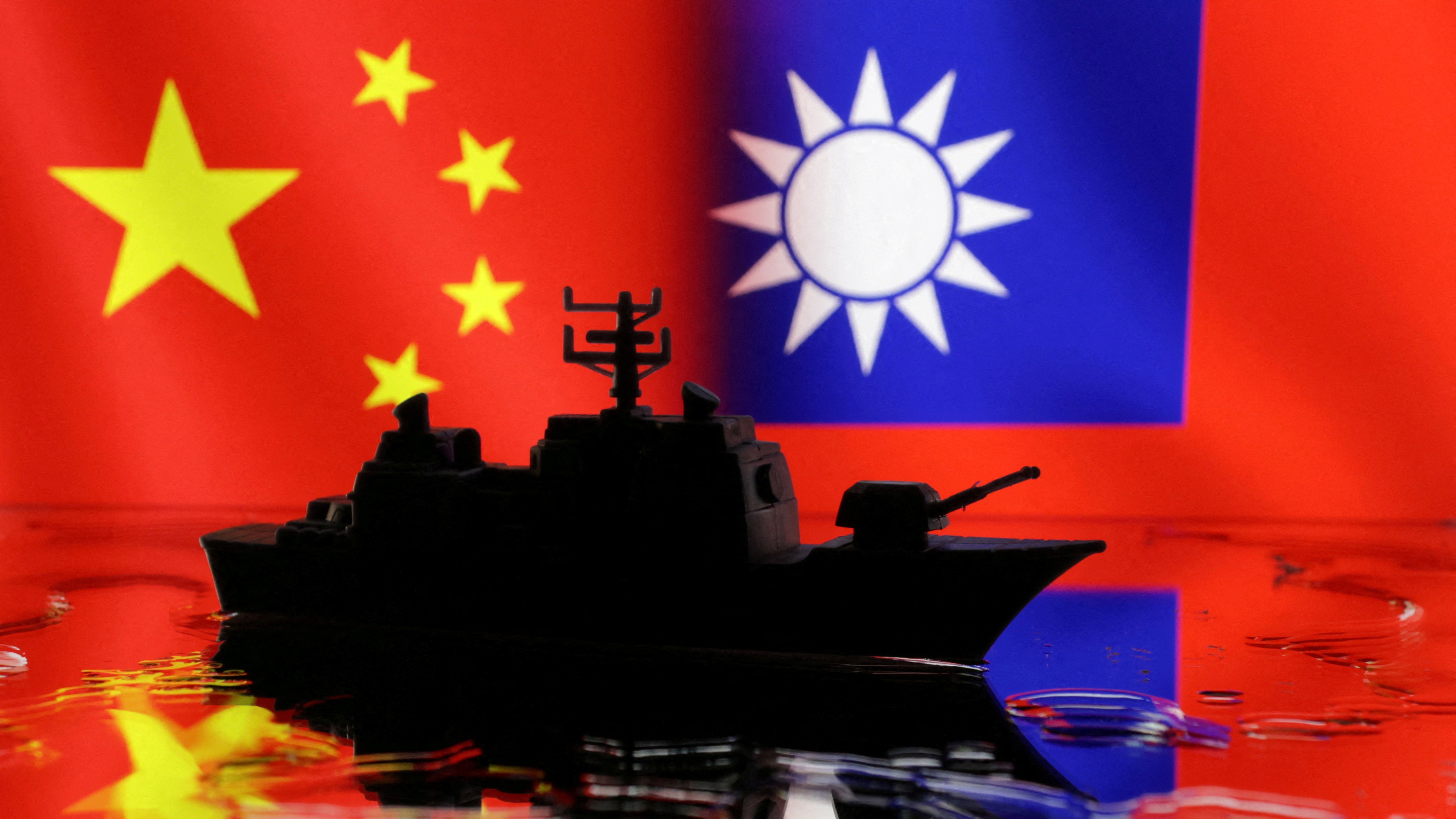
The delicate geopolitical balance of the South China Sea has been nudged once again, sending ripples of concern across East Asia and the broader international community. In a development that defense analysts are closely monitoring, Taiwanese authorities recently disclosed that a Chinese coast guard vessel and a scientific research ship conducted a highly coordinated joint operation near strategically critical islands in the South China Sea. Taiwan characterized the maneuver as a deliberate attempt to provoke and test the boundaries of regional security, marking a sophisticated escalation in Beijing’s maritime strategy.
To fully grasp the gravity of this situation, one must look at the geography of these contested waters. The islands in question, though small, sit atop major maritime highways through which trillions of dollars in global trade pass annually. For Taiwan, maintaining a presence and monitoring these outposts is vital for national defense and territorial integrity. The sudden appearance of a coordinated fleet consisting of both a law enforcement hull and a marine survey vessel represents a dual-threat approach. It is not merely a show of force; it is an active effort to map the underwater terrain while simultaneously projecting legal authority over the surrounding waters.
According to reports consolidated by regional security observers and international monitoring agencies, this specific combination of vessels suggests a calculated doctrine of "gray-zone" warfare. Gray-zone tactics involve coercive actions that remain just below the threshold of open military conflict. By deploying the coast guard—ostensibly a civil law enforcement agency—and a research ship rather than the gray-hulled warships of the People’s Liberation Army Navy, Beijing attempts to normalize its presence and assert administrative control over disputed zones. This minimizes the risk of triggering a direct military confrontation while slowly shifting the status quo in its favor.
The timing of this coordinated patrol is particularly sensitive. It occurs amidst a backdrop of heightened tensions throughout the Indo-Pacific, where multiple nations, including the Philippines, Vietnam, Malaysia, and Brunei, hold overlapping claims. For global observers and overseas Filipino workers who rely on stable maritime commerce, any escalation in these waters is cause for concern. The Philippines, in particular, has faced similar encounters with the Chinese coast guard and maritime militia in the West Philippine Sea. The shared challenges faced by Manila and Taipei highlight a growing pattern of assertiveness that regional security alliances are struggling to counter.
Maritime experts point out that the involvement of a survey ship is especially significant. These vessels are equipped with advanced sonar and mapping technologies capable of charting the seabed. While ostensibly conducting scientific research, the data gathered by these ships is invaluable for submarine warfare and underwater navigation, directly benefiting China’s naval expansion. When paired with a heavily armed coast guard escort, the survey ship can operate with impunity, effectively squeezing out the patrol capabilities of smaller claimant nations.
Taiwan’s response has been one of high alert. Maritime patrol units and naval assets were deployed to monitor the situation, ensuring that the joint Chinese vessels did not breach sovereign boundaries while documenting the encounter for international record. By calling out this "provocation" on the global stage, Taiwan seeks to draw international attention to the shifting dynamics of the region, hoping to garner diplomatic support from allies like the United States and regional partners who advocate for a free and open Indo-Pacific.
As these incidents become more frequent and coordinated, the risk of miscalculation grows. A single collision or an overzealous maneuver by captains on either side could spark a larger diplomatic crisis, disrupting global supply chains and destabilizing regional economies. For the millions of people living in Southeast and East Asia, the hope remains that diplomatic channels and international maritime law will prevail over unilateral actions.
Data sourced from regional defense bulletins and international monitoring reports.