

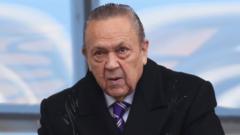
To understand the gravity of this moment, one must look at the long and storied history of David Sullivan in the British business and sporting landscapes. Long before he became the face of the Hammers, Sullivan built a massive financial empire in the publishing and adult entertainment industries during the 1970s and 1980s. Alongside his long-term business partner, the late David Gold, Sullivan transitioned into sports ownership by taking control of Birmingham City in 1993. Over the course of sixteen years, they took the Blues from the depths of the lower leagues to the heights of the Premier League, establishing themselves as savvy, hands-on administrators. In 2010, the duo achieved what many saw as their ultimate goal: acquiring a controlling stake in West Ham United, the club Sullivan had supported since his youth.
Sullivan's tenure at West Ham has been anything but quiet. Over the past fourteen years, he has overseen some of the most dramatic chapters in the club's modern history. Most notable was the highly controversial move from the beloved Boleyn Ground at Upton Park to the London Stadium in Stratford. While the relocation was financially lucrative and expanded the club's matchday capacity significantly, it deeply alienated a segment of the traditional fanbase who felt the club was losing its working-class soul. Sullivan frequently found himself at the center of fan protests, with supporters criticizing the board's transfer policies and overall vision. Yet, there were also moments of immense triumph, culminating in the historic UEFA Europa Conference League victory in Prague, which brought the club its first major silverware in over four decades.
Now, all of that history is overshadowed by the looming publication of these unspecified historic allegations. In the modern corporate environment of sports, particularly within the multi-billion-dollar ecosystem of the English Premier League, organizations must act with extreme speed when reputational risks emerge. Premier League clubs are no longer just local community assets; they are global brands with major international sponsors, massive television contracts, and strict governance guidelines. The league’s Owners’ and Directors’ Test has come under intense scrutiny in recent years, forcing clubs to adhere to rigorous ethical and administrative standards. By stepping down immediately, Sullivan has effectively insulated West Ham United from direct association with the impending allegations, preventing potential commercial fallout and allowing the club to maintain operational focus.
Inside the club, the day-to-day management will continue under the remaining leadership structures. Czech billionaire Daniel Kretinsky, who acquired a significant 27% stake in the club, alongside vice-chairman Karren Brady, will likely steer the ship through this period of transition. For the players and coaching staff under Julen Lopetegui, the challenge will be maintaining focus on the pitch amid the intense media storm that is bound to follow. The departure of a figure as dominant as Sullivan inevitably leaves a power vacuum, and how the remaining board members navigate the coming months will determine the club's long-term stability.
Ultimately, this development serves as a stark reminder of how quickly fortunes can change in the high-stakes world of professional football. For decades, David Sullivan was one of the most powerful powerbrokers in the English game, a man accustomed to making the final call on multi-million-pound transfers and managerial appointments. Today, he faces an entirely different kind of battle, away from the floodlights of the London Stadium. As the football world awaits the formal publication of the allegations, West Ham United must find a way to move forward into a new era, detached from the man who helped shape its modern identity.
Data sourced from British media and official West Ham United club statements.