

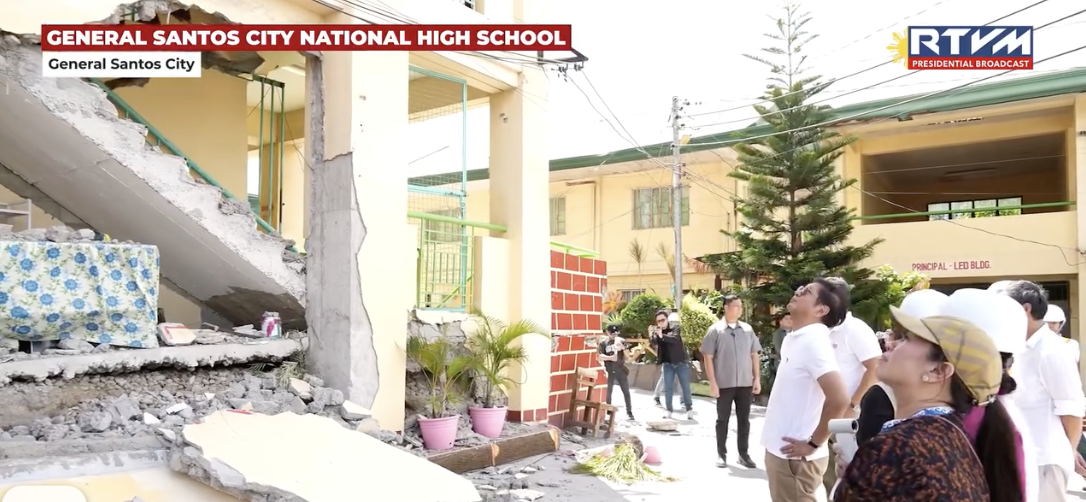
Trauma, especially in the context of natural disasters, manifests in ways that are not always immediately visible. For a young student who lived through the violent shaking of walls and the subsequent loss of safety in their own classroom, the school environment—which should be a sanctuary of learning—can suddenly become a trigger for anxiety, panic, and prolonged distress. The President’s directive to provide mental health assessments is an acknowledgment that the recovery of the education sector goes beyond simply fixing roofs and clearing debris. It is about restoring the confidence of a child to step back into a building without the crushing fear that the floor might drop away again.
Historically, our nation has viewed disaster recovery through a very utilitarian lens: food, water, temporary shelter, and rebuilding costs. However, there has been a paradigm shift in recent years. We are beginning to understand that without emotional triage, the 'aftershocks' of a disaster can persist in the form of learning disabilities, social withdrawal, and long-term mental health challenges that affect productivity and well-being well into adulthood. By integrating mental health support into the standard post-disaster response, the government is essentially creating a safety net for the psychological stability of the next generation. This proactive stance is a vital leap forward in how we manage public health crises in the Philippines.
It is worth noting that for those in Mindanao, this latest earthquake is just one layer of a complex tapestry of challenges. Many of these families have been resilient in the face of previous calamities, but every event takes a compounding toll on the psyche. For students, the disruption is doubly difficult because it halts their educational momentum. When a student cannot focus because they are trapped in a loop of fear, their academic progress suffers. By deploying mental health professionals to schools, we are not just helping the students; we are helping teachers who are often tasked with managing these classrooms while dealing with their own trauma. It is a holistic approach that recognizes the entire school ecosystem as a patient in need of healing.
As we look ahead, the challenge will lie in the sustained delivery of these services. It is easy to initiate a program in the immediate aftermath, but trauma often surfaces in the weeks and months following the event. The commitment to assess the mental health of our learners is a promising start, provided that the government stays the course, ensures funding reaches the most remote municipalities, and coordinates effectively with local government units. We must also consider the role of parents and guardians, who are the primary caregivers but may also be struggling. As we collectively process the magnitude of the Mindanao event, let us hope that the focus on mental health becomes a permanent fixture in our national disaster risk management protocols, proving that we value the Filipino spirit as much as we value our physical infrastructure. This is a journey toward collective resilience that requires empathy, consistency, and a deep understanding of what it means to rebuild a life, not just a building.