

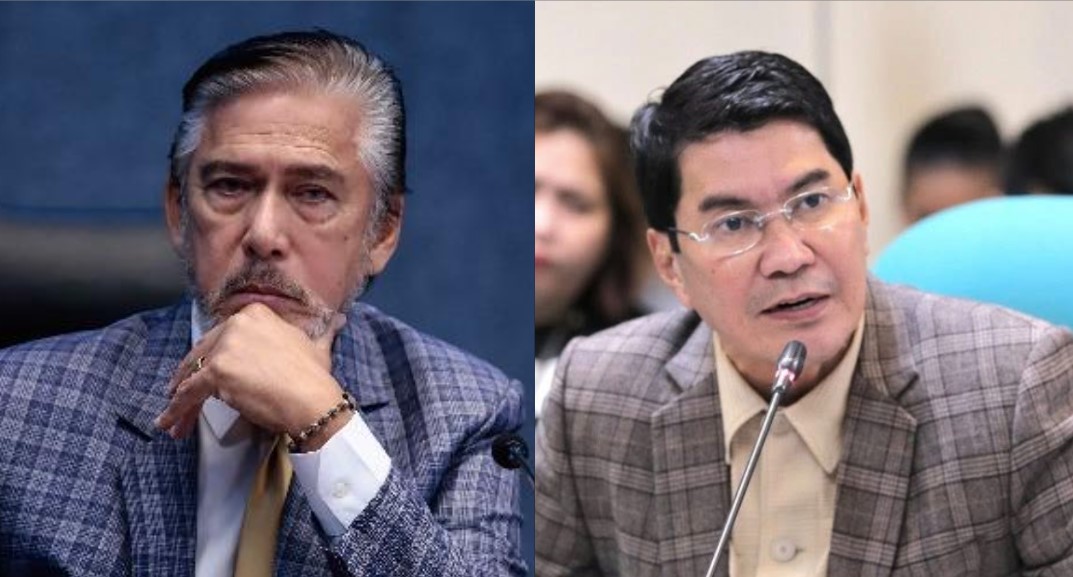
The Philippine political landscape has long been accustomed to dramatic turns, high-stakes accusations, and the constant tug-of-war over public trust. In the latest chapter of this ongoing saga, prominent political figures have found themselves at the center of serious allegations involving illicit payouts. Former Senate President Vicente "Tito" Sotto III and sitting Senator Erwin Tulfo have both issued firm and unequivocal denials regarding claims that they received suitcases packed with cash kickbacks originating from anomalous flood control projects.
According to a comprehensive report by GMA News, the accusations emerged from individuals identifying themselves as former members of the Philippine Marines and the military. These individuals alleged that massive sums of money were systematically distributed to key political figures as kickbacks from highly lucrative, yet heavily criticized, flood control initiatives. The image of suitcases filled with cash is one that deeply resonates in the history of Philippine political scandals, evoking memories of past controversies and instantly capturing the attention of the public and the media alike.
However, both Sotto and Tulfo were quick to dismiss these claims as entirely baseless, malicious, and devoid of any substantive evidence. The swiftness of their rebuttals highlights the sensitive nature of these allegations, especially at a time when public scrutiny over government expenditures—particularly infrastructure projects like flood control—is at an all-time high.
To understand the weight of these accusations, one must look at the broader context of flood control projects in the Philippines. Every year, during the monsoon season, the country is battered by severe typhoons that cause widespread devastation, displacement, and economic losses. Consequently, billions of pesos are allocated annually to the Department of Public Works and Highways (DPWH) and other agencies to construct dikes, pumping stations, and drainage systems. Because of the vast sums involved and the recurring nature of these projects, flood mitigation efforts have frequently been the subject of congressional inquiries and public skepticism. Critics often argue that despite the massive budgets, many communities continue to suffer from chronic flooding, leading to suspicions of corruption and backroom deals.
In this highly charged atmosphere, the allegations made by the self-proclaimed former military personnel struck a nerve. The accusers claimed to have firsthand knowledge of, or direct involvement in, the delivery of these cash-filled suitcases. Such claims, if proven true, would represent a severe breach of public trust and a serious criminal offense.
For decades, the Philippine Senate and the House of Representatives have been tasked with the tedious process of budget deliberations. During these sessions, trillions of pesos are scrutinized, debated, and ultimately allocated to various government departments. Among the most closely watched allocations are those earmarked for the Department of Public Works and Highways, specifically for localized flood control systems. Despite these rigorous legislative debates, the persistence of allegations concerning "pork barrel" allocations and backdoor negotiations continues to cast a long shadow over the national budget. The current accusations against Sotto and Tulfo must be understood within this historic cycle of public distrust, where even the most seasoned legislators find themselves defending their integrity against anonymous or unverified whistleblowers.
Furthermore, the strategic use of military identity in leveling these charges raises crucial questions about institutional credibility. When individuals present themselves as former Marines or soldiers, they tap into a reservoir of public respect associated with the armed forces. Historically, military personnel are viewed as disciplined, patriotic, and inherently credible. However, when such serious claims are made without supporting documentary evidence or official investigations, it forces the public to tread a fine line between wanting to believe whistleblowers and demanding the strict constitutional right of due process. Both Sotto and Tulfo have leveraged this exact point, arguing that allowing unverified testimonies to dictate public opinion undermines the very rule of law that the military itself is sworn to protect.
In his defense, former Senate President Tito Sotto expressed deep disappointment over what he characterized as a smear campaign. With decades of public service under his belt, Sotto argued that his record speaks for itself and that he has never been associated with such illicit transactions. He challenged his accusers to present concrete proof rather than relying on sensationalized narratives that only serve to damage reputations without due process.
Similarly, Senator Erwin Tulfo, known for his hard-hitting journalistic background before entering public office, vehemently denied any involvement. Tulfo has built a reputation as a champion of the common man, often exposing corruption and inefficiency in government operations. For him, being accused of receiving kickbacks is a direct assault on his credibility and the platform upon which he was elected. Tulfo emphasized that his office remains transparent and that he is fully prepared to face any legitimate investigation to clear his name, while also warning that those spreading false information should be held legally accountable.
As the dust settles on this initial round of denials, the broader implications for Philippine governance remain clear. The public's patience with corruption allegations is wearing thin, and there is a growing demand for systemic reforms that ensure absolute transparency in infrastructure spending. Whether these allegations will lead to a formal Senate inquiry remains to be seen, but they have undoubtedly reignited the national conversation on how public funds are safeguarded.
Ultimately, this controversy underscores the vital role of a free press and vigilant citizenship in holding leaders accountable, while also highlighting the necessity of protecting individuals from unfounded accusations that can ruin lives and careers in an instant.
Data sourced from GMA News.