

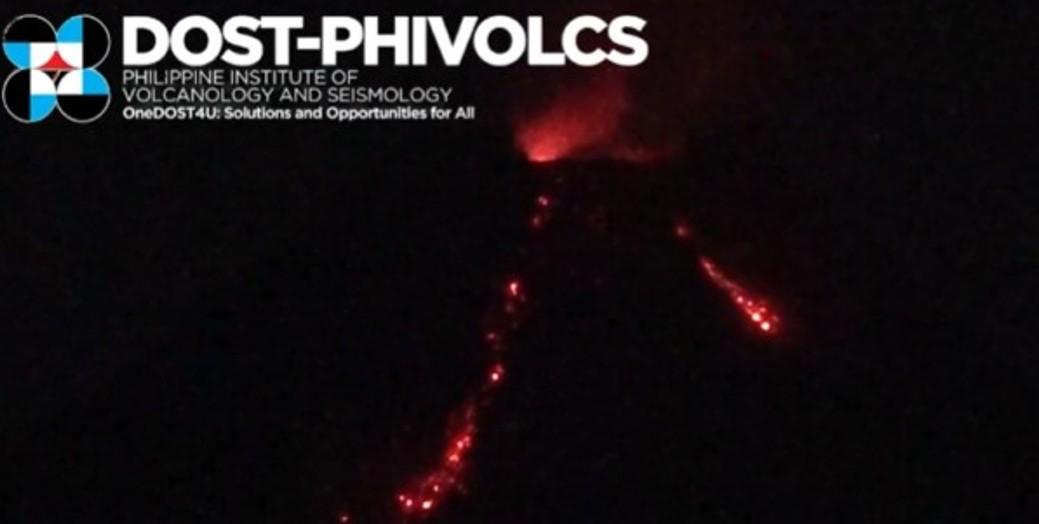
For more than five months, the majestic yet formidable silhouette of Mayon Volcano in Albay has captured the attention of the nation. Marking its 152nd consecutive day of effusive eruption, the world-famous volcano continues to exhibit a slow, relentless outpouring of lava from its summit crater. This quiet but persistent activity presents a unique challenge for scientists, local authorities, and the resilient communities living in its shadow, balancing the awe of nature with the constant necessity of disaster preparedness.
According to reports from the Philippine Institute of Volcanology and Seismology (PHIVOLCS), this prolonged effusive phase has been characterized by the gentle extrusion of lava, rockfall events, and occasional pyroclastic density currents. Unlike explosive eruptions that send massive columns of ash and pyroclastic materials high into the stratosphere in a matter of minutes, an effusive eruption acts as a slow release valve. While less immediately catastrophic, it requires an entirely different approach to long-term community resilience and scientific monitoring.
Living with a restless giant is a familiar reality for the residents of Bicol. Historically, Mayon is renowned as the most active volcano in the Philippines, famed for its near-perfect cone shape and feared for its destructive history. From the devastating 1814 eruption that buried the Cagsawa Church to more recent explosive events in 1993 and 2018, the province of Albay has developed a deeply ingrained culture of safety and preparedness. The current 152-day streak of activity tests this preparedness daily, requiring local disaster risk reduction and management offices to maintain a state of constant vigilance.
The slow-moving lava flows and frequent rockfall events have kept the six-kilometer Permanent Danger Zone (PDZ) strictly off-limits. For the farming families whose livelihoods depend on the fertile volcanic soil at the base of Mayon, this means prolonged displacement and economic strain. Evacuation centers have become temporary homes for thousands of residents, highlighting the socioeconomic toll of a long-term volcanic event. Local government units, alongside national agencies, have been working tirelessly to provide continuous relief, healthcare, and educational facilities for displaced families.
From a scientific perspective, Mayon's current behavior offers invaluable data. PHIVOLCS volcanologists utilize an array of advanced monitoring tools, including electronic tiltmeters, GPS networks, satellite imaging, and gas spectrometers, to measure the volcano's inflation, sulfur dioxide emissions, and seismic activity. This continuous flow of real-time data allows scientists to detect any sudden changes in subsurface pressure that might indicate a transition from a gentle effusive state to a dangerous explosive phase. Keeping the public informed with accurate, scientifically backed updates remains the primary defense against panic and misinformation.
The situation also resonates deeply with the global Filipino community. Overseas Filipino Workers (OFWs) hailing from the Bicol region closely monitor social media and news feeds for updates on their families. The anxiety of being thousands of miles away while loved ones live near an active volcano is a shared experience for many. The digital age has bridged this gap, allowing families to stay connected and enabling global communities to coordinate aid and support for affected municipalities.
As Mayon Volcano continues its mesmerizing yet hazardous display, it serves as a powerful reminder of our relationship with the natural world. It demands respect, caution, and an unwavering commitment to safety. The ongoing coordination between government agencies, volcanologists, and local communities remains a model of proactive disaster management, ensuring that even as Mayon burns slowly, the safety and well-being of Albay's residents remain fully protected.
Data sourced from reports by the Philippine Institute of Volcanology and Seismology (PHIVOLCS) and GMA News.