

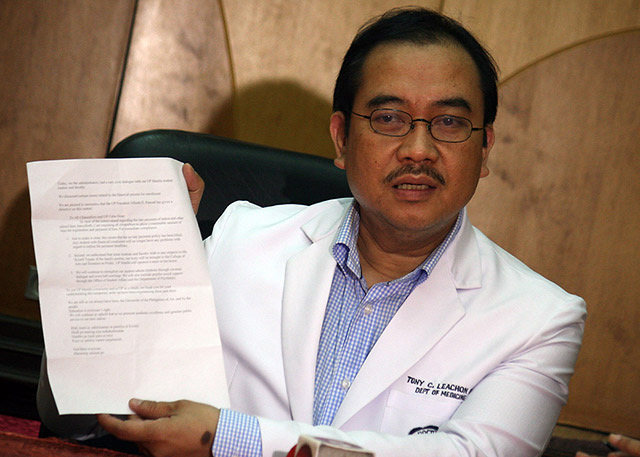
The Philippine medical community and the public at large were sent into a state of shock following a deeply concerning announcement from one of the country's most prominent healthcare advocates. Dr. Anthony "Tony" Leachon, a household name known for his outspoken stance on public health policies, revealed that he is currently facing severe threats. These are not merely digital taunts but grave hazards directed at his life, his professional career, and his license with the Professional Regulation Commission (PRC). In a candid and chilling statement released on Monday, Dr. Leachon laid bare the vulnerability of his position, pointing directly to political figures as the primary suspects should any harm befall him. This sudden revelation has ignited a broader conversation about the safety of professionals who dare to speak truth to power in the Philippines.
For many Filipinos, Dr. Leachon is a symbol of scientific integrity and public service. During the height of the COVID-19 pandemic, his was a reassuring yet realistic voice that cut through the noise of political rhetoric and bureaucratic confusion. As a former special adviser to the National Task Force Against COVID-19, he consistently pushed for robust data-driven decisions, mass testing, and transparent communication. However, this unwavering commitment to public welfare often put him at odds with administrative agendas. His eventual departure from the government task force highlighted a growing friction between clinical reality and political convenience—a friction that seems to have escalated into the current threats he now faces.
According to a detailed report by GMA News, Dr. Leachon’s recent statement does not mince words. The physician made it clear that the pressure campaign against him has reached a critical threshold, targeting not only his physical safety but also his professional livelihood. The threat to strip him of his PRC license is particularly insidious. For a medical professional who has dedicated decades to saving lives and mentoring the next generation of physicians, a license is not just a piece of paper; it is the ultimate validation of their life's work. To weaponize the regulatory mechanisms of the state against an independent voice is a tactic designed to enforce silence through professional ruin.
This development brings to light the perilous landscape that public intellectuals and whistleblowers must navigate in the contemporary political environment. It raises fundamental questions about the protections afforded to those who offer constructive criticism of public policy. When a respected doctor and civic leader feels compelled to issue what is essentially a pre-emptive distress signal to the public, it signals a systemic vulnerability. It suggests that the traditional boundaries of political debate have been breached, replaced by coercive tactics that threaten the very existence of those who dissent.
The medical community has long warned of the chilling effect that political interference can have on healthcare. When doctors are forced to self-censor out of fear for their safety or their credentials, public health inevitably suffers. Decisions are made in a vacuum, devoid of the critical oversight that only independent experts can provide. Dr. Leachon’s situation is a stark reminder that the battle for public health is deeply intertwined with the battle for democratic expression and professional autonomy.
As news of the threats spread, social media platforms and professional networks were flooded with expressions of solidarity. Colleagues, patients, and ordinary citizens have rallied behind Dr. Leachon, calling on law enforcement agencies to conduct a thorough investigation and ensure his protection. The consensus among his supporters is clear: a threat to Dr. Leachon is a threat to the collective voice of the medical profession. It challenges the principle that scientific expertise should guide public policy, rather than be subservient to political interests.
Looking ahead, the resolution of this crisis will be a telling indicator of the country's commitment to protecting its professionals and upholding the rule of law. It places the spotlight on regulatory bodies like the PRC and law enforcement agencies, urging them to demonstrate their independence and protect their members from politically motivated harassment. Dr. Leachon has taken a brave step by bringing these threats into the light of public scrutiny, refusing to be silenced in the shadows. The public now watches closely, hoping that transparency will serve as his shield.
In analyzing the broader implications, this situation underscores the urgent need for systemic reforms that protect expert advocates from political retributive action. The vulnerability of professional licenses to political manipulation must be addressed to ensure that experts can speak freely without fearing the loss of their livelihood. Until such safeguards are robustly established, the courage of individuals like Dr. Leachon remains the thin line protecting the public interest from unchallenged political authority.
Data sourced from a report by GMA News.
#BalitaBNB #NewsUpdate