

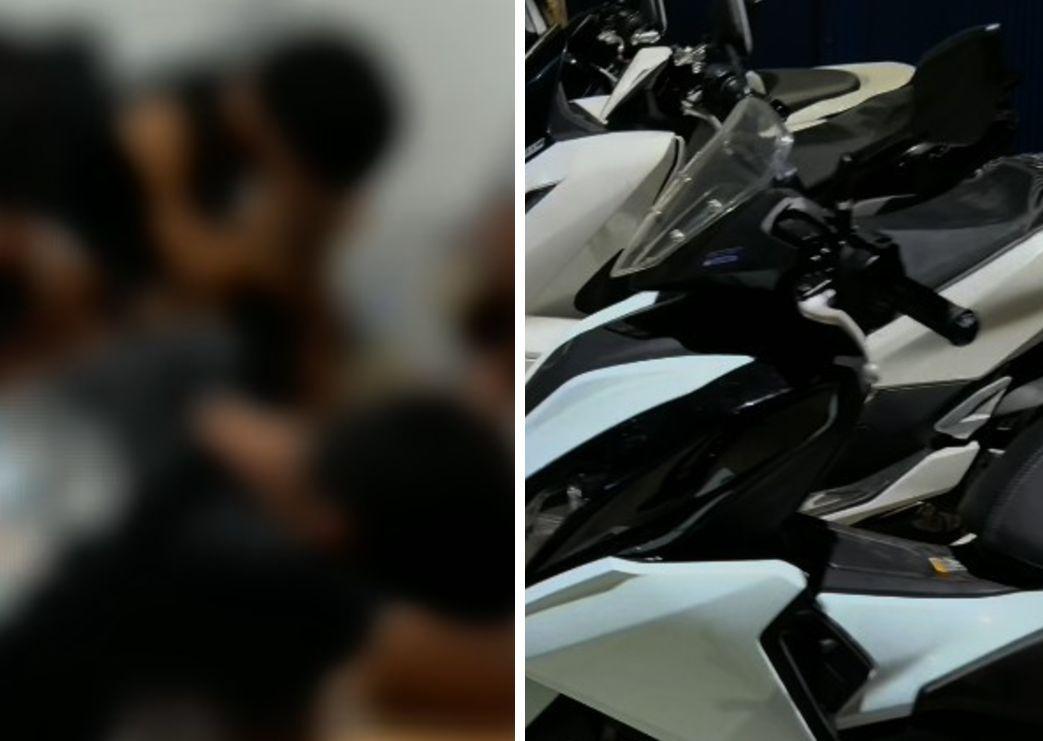
The quiet of a Friday night was shattered by a series of synchronized, high-stakes police operations sweeping across the bustling streets of Metro Manila and into the neighboring province of Rizal. In a decisive blow against organized crime, law enforcement operatives successfully apprehended the alleged mastermind and seven key members of a notorious robbery and carnapping syndicate. This breakthrough represents a major milestone in the ongoing battle to secure the streets of the national capital region and its surrounding provinces, where vehicle theft and highway robberies have long been a thorn in the side of both motorists and authorities.
The complex operation, which unfolded in the late hours of Friday, required meticulous planning and seamless coordination between various police units. Operating across geographic boundaries is never an easy feat for law enforcement, as criminal groups frequently exploit jurisdictional gaps to evade capture. By committing crimes in the heart of Metro Manila and quickly retreating to safe houses in the more suburban or mountainous terrains of Rizal, these syndicates often manage to stay one step ahead of localized police forces. However, this Friday night, the coordinated strategy of the Philippine National Police proved highly effective, trapping the suspects in a dragnet that left little room for escape.
To understand the significance of these arrests, one must look at the broader landscape of vehicle theft in the Philippines. For years, carnapping has evolved from simple opportunistic thefts into highly sophisticated criminal operations. Modern syndicates no longer rely solely on hot-wiring cars parked on dark streets. Instead, they employ complex schemes ranging from 'rent-tangay'—where vehicles are rented under false pretenses and never returned—to armed highway robberies and the systematic cloning of vehicle identification numbers. Once a vehicle is stolen, it is often quickly dismantled in hidden chop-shops, its parts sold off to unsuspecting buyers, or it is shipped to distant provinces with forged documents, making recovery incredibly difficult for the rightful owners.
The economic and emotional toll on victims of carnapping is immense. For many Filipinos, acquiring a vehicle represents years of hard work, sacrifices, and financial planning. A car or a motorcycle is not just a luxury; it is a vital tool for livelihood, family transport, and daily survival. When a syndicate deprives a family of this asset, they do not just steal a piece of machinery—they disrupt lives and strip away economic stability. By dismantling this specific group, the police have not only recovered stolen property but have also prevented countless future victims from experiencing the devastating impact of these crimes.
This successful operation also underscores the critical role of intelligence sharing and community involvement. Law enforcement officials often emphasize that community tips are the lifeblood of successful anti-crime campaigns. Neighbors noticing unusual activities in local garages, suspicious transactions involving vehicle parts, or the frequent movement of unregistered vehicles often provide the crucial puzzle pieces that investigators need to build a solid case. In an era where technology plays a double-edged role—enabling criminals to coordinate faster while allowing police to track them more efficiently—traditional boots-on-the-ground intelligence remains indispensable.
As the investigation continues, authorities are working to trace the full extent of the syndicate's network. Investigators are looking into whether the group has links to other active robbery gangs in Luzon or if they are connected to corrupt individuals who facilitate the creation of fake vehicle registrations. Ensuring that the arrested suspects face swift and robust prosecution is the next vital phase of this operation, sending a clear warning to other criminal elements that the law will eventually catch up with them.
For everyday motorists, this incident serves as a timely reminder to take proactive measures in securing their vehicles. Experts recommend investing in steering wheel locks, installing GPS tracking devices, and always parking in well-lit, secure areas with active surveillance. While police operations like the one on Friday night do much to dismantle the supply side of stolen vehicles, reducing opportunities for theft on the demand side remains equally important.
Ultimately, the dismantling of this Metro Manila and Rizal-based syndicate is a testament to the dedication of the men and women in uniform who risk their lives to keep the public safe. It highlights a renewed vigor within the police force to reclaim public spaces from organized criminal elements, offering a glimmer of hope for a safer, more secure commute for everyone.
Data sourced from a report by GMA News.