

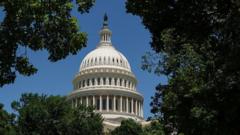
This vote marks the fourth attempt by lawmakers to assert their authority in matters of military action, particularly in relation to Iran, a country that has remained a focal point in U.S. foreign policy for decades. The House's decision comes in the wake of increased tensions between the U.S. and Iran, particularly following the assassination of Iranian General Qasem Soleimani earlier this year, which escalated fears of broader conflict in the Middle East.
The measure received bipartisan support, albeit minimal, with four Republican representatives joining the Democrats in favor of the legislation. This reflects a growing concern among lawmakers about the implications of unilateral military action by the President without Congressional approval, a concern deeply rooted in the War Powers Resolution of 1973, which was designed to limit the President's ability to engage in armed conflict without legislative consent.
The recent vote also underscores the shifting dynamics within the Republican Party itself, where some members are increasingly willing to challenge the President's authority on issues of military intervention. This internal conflict may signal a broader reevaluation of what it means to be part of the Republican Party in the current political climate, especially as public opinion continues to sway against prolonged military engagements abroad.
As the world watches, the implications of this vote extend far beyond the halls of Congress. It raises critical questions about the balance of power in the U.S. government and the role of elected officials in shaping the nation's foreign policy. Observers note that this action may embolden other lawmakers to pursue similar measures aimed at curbing presidential powers, setting a precedent for future administrations.
Moreover, the decision has sparked heated debates among the public and political analysts alike. Many argue that this is a necessary step toward restoring Congressional oversight and accountability in matters of war and peace. Others, however, believe that such constraints could hinder the President's ability to respond swiftly to threats against the nation.
In addition to the immediate political implications, this vote also reflects a broader public sentiment. A significant portion of the American populace is increasingly wary of military interventions, advocating instead for diplomatic solutions and a focus on domestic issues. This growing skepticism has found its way into the political discourse, influencing how representatives approach issues of war powers and military engagement.
As the measure moves forward, it will be interesting to see how the Senate responds. The GOP-controlled Senate may view this vote differently, and it remains to be seen whether they will uphold the House's decision or align more closely with the executive branch's stance on foreign policy. The ongoing dialogue surrounding this issue is likely to shape the political landscape as the nation prepares for the 2020 elections, where foreign policy will undoubtedly be a pivotal topic.
According to a report by BBC News, the outcome of this vote not only reflects the current political climate but also sets the stage for ongoing discussions about the limits of presidential power and the role of Congress in foreign affairs. As this issue continues to evolve, it will be crucial for citizens to stay informed and engaged in the debate surrounding the future of U.S. military engagements abroad.