

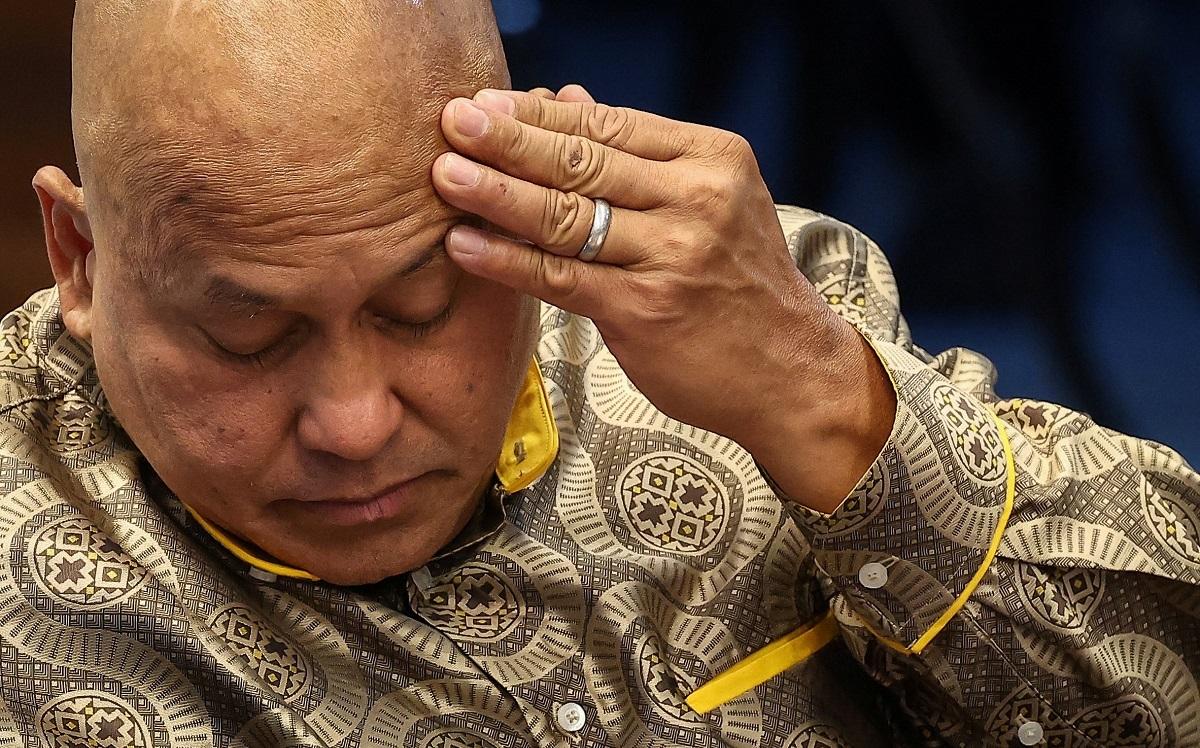
Data sourced from GMA News. The debate surrounding the International Criminal Court (ICC) and its reach within the Philippines has long been a complex tapestry of constitutional interpretation and international obligation. Recently, the discourse gained significant momentum following insights from Supreme Court Associate Justice Alfredo Benjamin Caguioa. His perspective touches on a fundamental legal question that has puzzled observers, legal scholars, and government officials alike: Does an international tribunal require the explicit seal of approval from a Philippine judge before an arrest can be carried out on local soil?
To understand why this is such a critical pivot point, one must look at the way our domestic legal framework interacts with the Rome Statute. Historically, the Philippines has navigated a rocky road regarding its relationship with The Hague. After the nation withdrew from the Rome Statute, the narrative shifted toward the scope of jurisdiction and the remaining obligations that the government might still hold regarding ongoing investigations. Justice Caguioa’s assertion that an arrest warrant issued by a Filipino judge is not a prerequisite for ICC-mandated actions brings a fresh, albeit provocative, lens to the discussion.
Imagine the procedural mechanics of such a situation. Typically, our judicial system relies on the principle of sovereignty, where local warrants are the standard currency for enforcement. However, the ICC operates under a different set of global protocols. When Justice Caguioa posits that local judicial validation is not the gatekeeper for these specific international proceedings, he is effectively separating the mandate of an international body from the traditional requirements of our internal court processes. It is a distinction that highlights the nature of international law—often seen as a separate layer that can, under specific conditions, bypass the domestic bureaucratic checkpoints we are so accustomed to.
This isn't merely a theoretical exercise in law; it has profound implications for how the Philippines manages its international commitments. Critics of such a stance argue that allowing international bodies to operate without local judicial oversight could tread on the toes of national sovereignty. Conversely, proponents of international accountability suggest that if the Philippines signed the Rome Statute in good faith, the mechanisms provided within that treaty should be respected, even if they deviate from our local "warrant-first" culture. It forces us to ask: where does our obligation to the world community end and our domestic legal protection begin?
Think about the weight of this interpretation. If we accept that an ICC arrest warrant holds its own weight independently of a Philippine judge’s signature, it fundamentally changes the strategic approach of the Department of Justice and the Philippine National Police. It shifts the conversation from a legal roadblock to a question of political will and international cooperation. It is an invitation for the country to re-evaluate its stance on global justice versus local legal autonomy.
As this discourse unfolds, it is worth noting that legal opinions like those of Justice Caguioa serve as a roadmap for the public to understand the gravity of our international commitments. They strip away the political jargon and get to the core of the judicial reality. Whether or not one agrees with the path forward, the clarity provided by high-ranking members of the judiciary helps move the needle from conjecture to informed public debate. The intersection of domestic law and international treaty obligations is rarely black and white, but moments like these bring the nuances into sharp relief, forcing us to reconcile our past treaty signatures with our current governmental priorities.
Ultimately, as we watch this space, we are observing a nation trying to balance its commitment to the rule of law at home with its position in the international community. The dialogue is evolving, and it remains a vital part of the Philippine political landscape. We will continue to monitor these developments as they impact legal policy and the broader relationship between the Philippines and global investigative bodies.
#BalitaBNB #NewsUpdate #Justice #PhilippineLaw #ICC