

**Politics: Navigating the Crossroads: The ICC, Senator Dela Rosa, and the Marcos Administration**
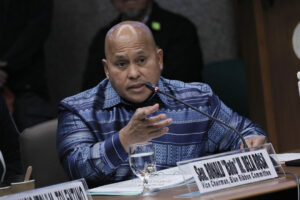
The air in Manila’s political circles has grown notably heavy lately, laden with the weight of looming international legal questions that reach right into the heart of the Philippine Senate. At the center of this storm sits Senator Ronald 'Bato' dela Rosa, whose name has become tethered to the ongoing investigation by the International Criminal Court (ICC) regarding the previous administration’s war on drugs. As the discourse intensifies, analysts are pointing toward a defining moment for President Ferdinand Marcos Jr., who now finds himself in a delicate position: how to balance international commitments with the maintenance of national sovereignty and the stability of his own political alliance.
It is difficult to ignore the historical baggage that comes with this issue. For years, the drug war represented the defining policy of the Duterte era, a campaign that polarized the nation and drew intense scrutiny from global human rights bodies. Now, with the ICC actively moving forward, the focus shifts to the present administration. For President Marcos, the optics are treacherous. If the ICC issues an arrest warrant for Senator Dela Rosa, the Philippine government faces a binary choice that could have lasting consequences for its 2028 trajectory. Do they allow the international body to carry out its mandate, or do they push back in the name of judicial supremacy? Political observers suggest that the key lies in transparency and constitutional adherence. If the government can demonstrate that any action taken is rooted firmly in the Philippine legal framework, they might mitigate the appearance of political bias or subservience.
However, the implications go far beyond the courtroom. We are seeing a distinct widening of the rift between the 'UniTeam' allies of yesterday. As the 2028 presidential race looms on the horizon, every move in the ICC saga is being interpreted through the lens of political survival. For Senator Dela Rosa, this is a personal battle against an institution he has openly defied. For the Marcos camp, it is a litmus test of their governance narrative—the ability to project a leader who respects the rule of law while simultaneously protecting the dignity of the office and the nation's independence.
Think about the complexity of this situation. If the administration leans too far into cooperating with the ICC, they risk alienating the loyalist base of their former allies. If they lean too far into protecting the Senator, they risk damaging the international reputation that the President has worked hard to rehabilitate since he took office. It is a tightrope walk where even a small misstep could lead to significant political instability. The constitutional question becomes the refuge for all parties involved: the idea that Philippine sovereignty, as defined by our own laws, must remain the primary arbiter of justice within our borders.
Yet, we must also consider the broader global perspective. International agreements are not mere suggestions; they are the bedrock of modern diplomacy. How the Philippines navigates this will likely dictate its standing with European partners and the broader human rights community for years to come. Many are asking: can the President steer a middle course that upholds the integrity of our legal system while acknowledging the reach of international law?
As we look ahead, the political climate remains volatile. The upcoming months will undoubtedly see more rhetoric, more legal maneuvering, and perhaps, more public frustration. What matters most is how the narrative is managed. By emphasizing that any potential enforcement of international warrants is governed by local judicial protocols, the administration might be able to de-escalate the rhetoric. It is about shifting the focus from 'political persecution' to 'legal process.' It is a subtle distinction, but in the realm of high-stakes politics, nuance is everything. Whether this will be enough to bridge the growing divides remains to be seen, but one thing is certain: the ICC issue is no longer just a legal matter—it is the defining political drama of our time.