

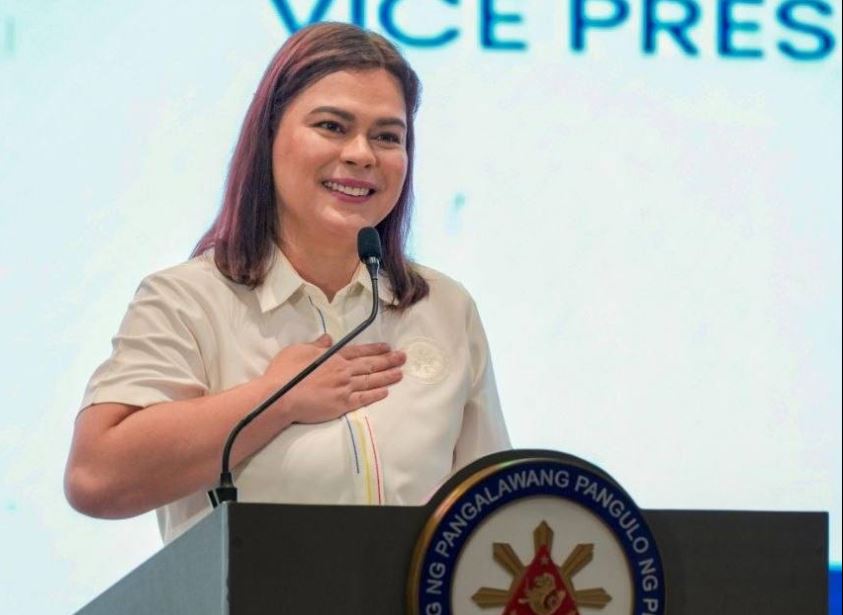
Recent developments in the halls of the House of Representatives have placed Vice President Sara Duterte in the eye of a political storm. A collective of eleven lawmakers, acting as a prosecution team, recently went on the record to state that the Vice President’s responses to ongoing impeachment discussions have lacked the necessary substance and factual backing required to deflect the serious allegations leveled against her. This development marks a significant escalation in what has become one of the most closely watched political sagas in contemporary Philippine governance.
Data sourced from GMA News indicates that the prosecution team remains unsatisfied with the narratives provided by the Vice President’s camp. In political discourse, an impeachment case is not merely a legal filing; it is a profound test of accountability and institutional transparency. When lawmakers argue that a response 'falls short' on facts, they are signaling a potential widening gap between the executive office’s defense strategy and the evidentiary requirements demanded by their legislative counterparts. This creates a friction point that resonates far beyond the plenary hall, touching on the very mechanisms of our democratic checks and balances.
To understand the gravity of this situation, one must look at the broader landscape of Philippine political history. Impeachment, as a tool, is designed to be a high-stakes mechanism, rarely utilized and always transformative in its impact. Whether or not these allegations will result in a formal trial is a question that currently consumes the attention of political analysts and the general public alike. What we are witnessing is a classic tug-of-war where one side emphasizes procedural accountability while the other navigates the complexities of public perception and political survival. The argument from the prosecution team focuses on the lack of 'material response,' suggesting that for every specific charge, the defense must provide equally specific evidence. Without this, the legislative body feels empowered to push forward, viewing the lack of a clear rebuttal as an admission or, at the very least, a sign of weakness in the defense.
There is also the matter of public sentiment. For Filipinos, both at home and abroad, these shifts in power and ongoing investigations are not just headlines—they are indicators of the health of the nation’s political climate. Many observers wonder if this is merely a case of political maneuvering or if there are legitimate structural concerns at play. The Vice President, who commands a significant base, represents a polar center in the country’s political spectrum. Consequently, any challenge to her tenure is viewed not just through the lens of law, but through the lens of loyalty, political realignment, and the future of party politics in the Philippines.
As the narrative unfolds, the demand for transparency grows louder. When elected officials are faced with such severe challenges, the public expects not just legalistic denials, but a comprehensive effort to address the root causes of the suspicion. The coming weeks are likely to be pivotal. We will be watching to see if the Vice President’s camp pivots toward a more detailed, evidence-based approach, or if they choose to maintain a stance that questions the legitimacy of the process itself. For now, the House prosecution team appears firm in their assessment that the ball is in the Vice President's court to provide the clarity that they believe is currently missing. The outcome of this exchange will inevitably shape the political landscape, potentially setting precedents for how high-ranking officials manage crises of this magnitude for years to come. Ultimately, the burden of truth in the eyes of the public will be the final arbiter in this complex unfolding story.