

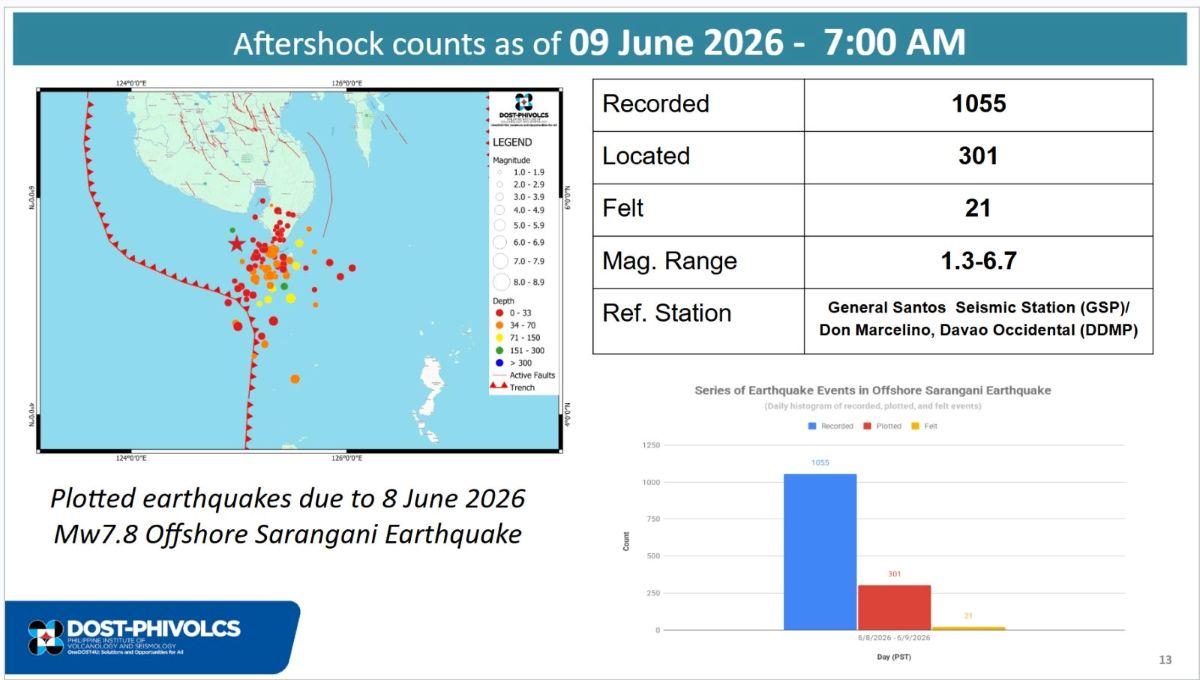
A powerful earthquake struck Mindanao, leaving a trail of destruction and chaos in its wake. According to a report by the Philippine Institute of Volcanology and Seismology, the magnitude 7.8 earthquake was followed by a staggering 1,055 aftershocks as of 7 a.m. Tuesday. The sheer number of aftershocks has left residents on edge, wondering when the next tremor will strike.
The earthquake's impact was felt across the region, with buildings reduced to rubble and power lines snapped. Emergency responders have been working around the clock to rescue those trapped under the debris and provide aid to those affected. The Philippine government has also deployed troops to assist in the relief efforts and maintain order in the affected areas.
As the people of Mindanao struggle to come to terms with the disaster, concerns are being raised about the region's disaster preparedness and response. The frequency and intensity of earthquakes in the Philippines are a stark reminder of the country's location on the Pacific Ring of Fire, making it one of the most seismically active regions in the world.
Data sourced from the Philippine Institute of Volcanology and Seismology.
The road to recovery will be long and arduous, but with the resilience and determination of the Filipino people, Mindanao will rise again from the ashes. As the region begins to rebuild, it is essential to prioritize disaster preparedness and mitigation measures to minimize the impact of future earthquakes.