

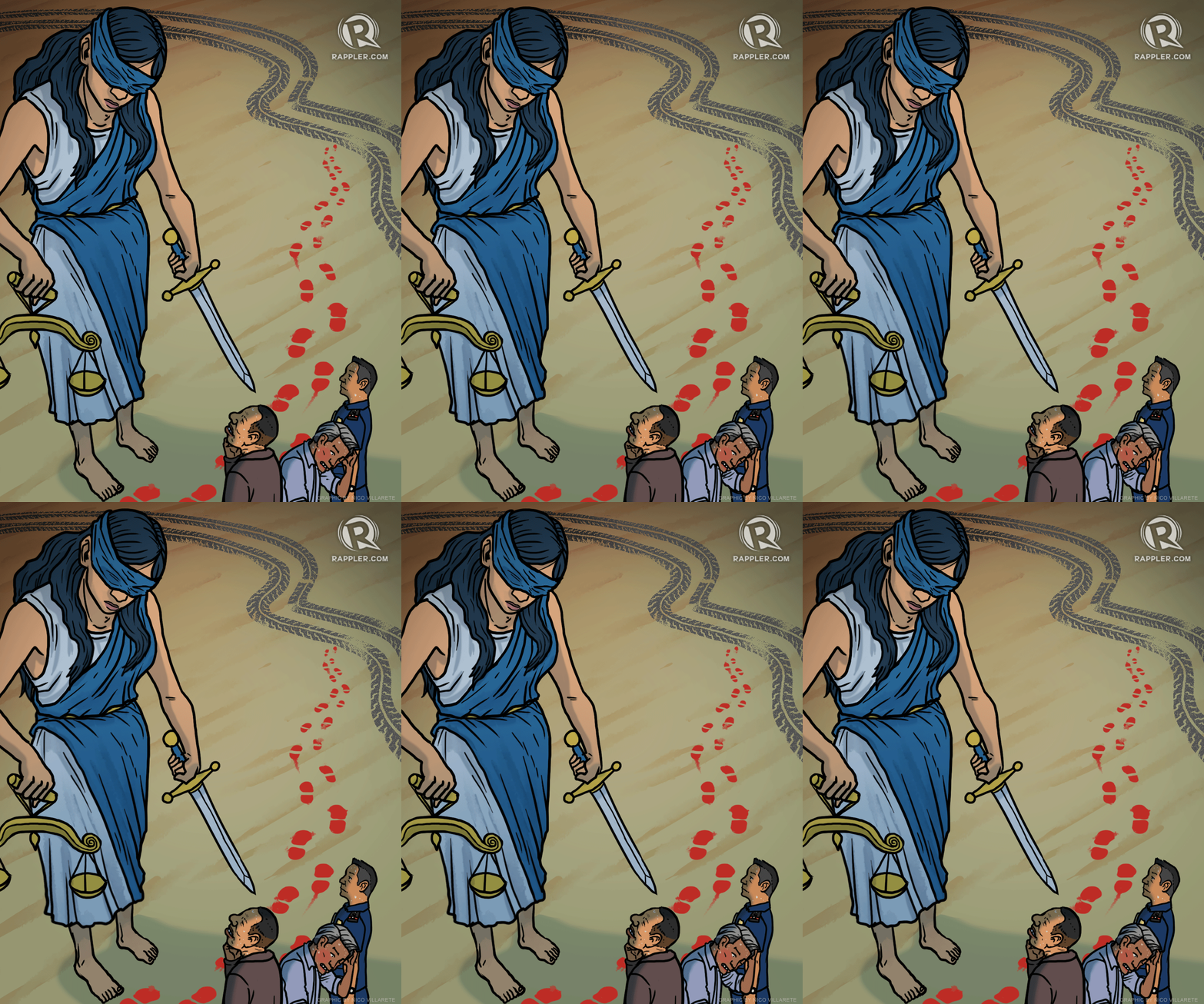
When we look at the halls of the Senate, we often expect a theater of policy—a place where the weightiest issues of the nation are debated with gravitas and intellectual rigor. Yet, recent events suggest a shift toward a different kind of production entirely: one defined by dramatics, strategic misdirection, and the occasional calculated exit. It brings to mind the old adage that politics is show business for the ugly, but today, it feels more like a poorly scripted soap opera where the stakes are our national future, yet the actors seem more focused on their personal screen time than the actual plot of accountability.
Data sourced from recent editorial commentary reveals a concerning trend: when the pressure of investigative scrutiny reaches a boiling point, the immediate reflex of some lawmakers is not to answer the tough questions, but to change the genre of the performance. We have seen it all—the tears shed at the podium to evoke sympathy, the sudden bouts of selective amnesia that seem to plague even the most sharp-witted politicians, and the theatrical 'walkouts' when the questioning gets too close to the bone. This isn't just about bad behavior; it is a profound failure of political will disguised as righteous indignation.
Think about the typical citizen trying to navigate the complexities of our justice system. If an ordinary Filipino is summoned to answer for a transgression, there is no room for theatrical flourishes. There is no stage to cry upon, no audience to perform for, and certainly no luxury of simply walking away when the evidence becomes inconvenient. Yet, within the protected bubble of legislative privilege, we witness a starkly different reality. The use of distraction as a defensive strategy is a slap in the face to every Filipino who expects their representatives to embody the rule of law rather than treat it as a suggestion.
This behavior is symptomatic of a deeper malaise. When a leader chooses to prioritize the narrative of victimhood over the hard work of operational transparency, they are essentially telling the public that they do not serve the constitution, but rather their own image. It creates a vacuum of leadership. A failure in operational leadership can be corrected with better training or a change in management, but a failure of political will? That is something that eats at the very foundation of our institutions. It suggests that the actors have forgotten the difference between a political campaign—where performance is part of the game—and public office, where the performance is supposed to be the actual, measurable service to the people.
We have to ask ourselves: how much longer are we willing to sit in the audience? The constant cycle of 'misdirect, cry, and flee' only works as long as the public continues to buy the tickets. When we allow our elected officials to turn accountability into a performative act, we aren't just observing politics; we are complicit in the devaluation of our democratic processes. Every time we focus on the drama rather than the evidence, the system loses a bit more of its integrity. It is time to demand a higher standard—a standard where the script is written in transparency, and the only theater allowed is the one where truth takes center stage.